

Few Lithuanian foods are as instantly recognisable as šakotis. The tall golden cake looks like a small tree or a tower of branches, and cutting it open reveals dozens of fine rings created during baking. It appears at weddings, Christmas tables and major family celebrations—but in Druskininkai you can go further than simply tasting it. At the Tree Cake Museum at Romnesa, visitors can see historic baking equipment, compare related cakes from other countries and meet a Guinness World Record giant.
This guide explores what Lithuanian tree cake is, how it is made, why its history crosses borders and what to expect when visiting the museum near Druskininkai.
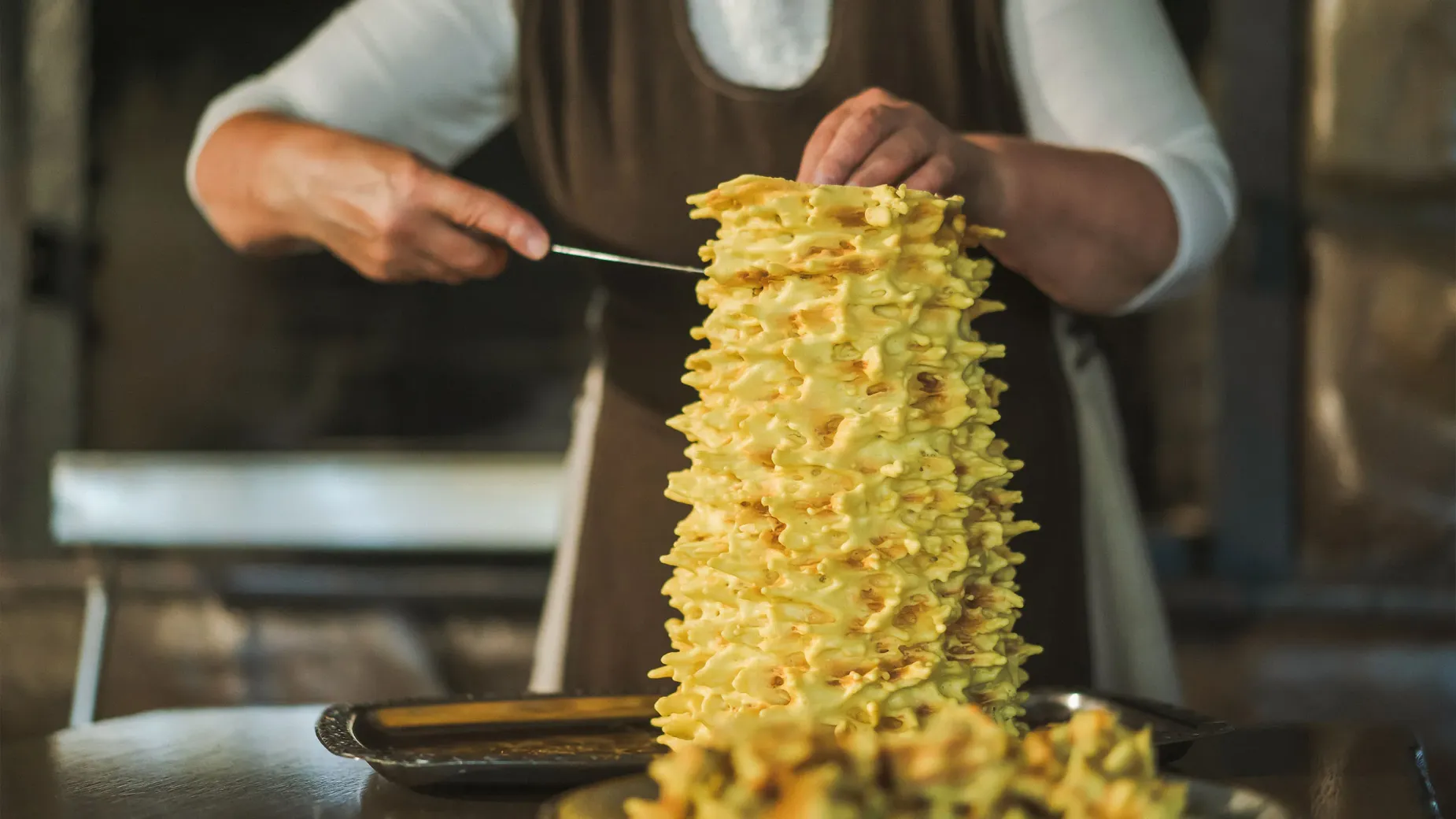
What is Lithuanian šakotis?
Šakotis is a rich spit cake made by pouring thin layers of egg-based batter onto a rotating cylindrical mould in front of heat. As the spit turns, some batter sets into rings around the centre while drops stretch outward and bake into irregular spikes. Those projections resemble branches, which explains the Lithuanian name: šaka means “branch”, and šakotis suggests something full of branches.
A classic batter usually contains a generous quantity of eggs together with butter, flour, sugar and cream or sour cream. Recipes vary between bakers and families. The finished cake is firm and crisp at its thinner points but richer and more tender inside. It is commonly served in pieces with coffee or tea rather than covered with icing like a soft layer cake.
Its hollow centre is not a missing filling. It is the space once occupied by the spit or mould. When a whole cake is displayed upright, the shape and golden spikes create the tree-like silhouette that makes šakotis such a dramatic celebration centrepiece.
A history shared across European borders
Šakotis is firmly embedded in Lithuanian culinary identity, but the broader idea of baking layered cake batter on a rotating spit is not unique to one country. Related traditions include Polish sękacz, German Baumkuchen, Hungarian kürtőskalács, Swedish spettekaka, French gâteau à la broche and other regional variations. Japan also developed a particularly refined Baumkuchen tradition.
The exact family tree is debated. Stories connect spit cakes with medieval European kitchens, monasteries, royal courts, travelling bakers or recipes carried across borders by armies and noble households. These accounts are interesting, but no single neat origin story explains every national version. What can be said safely is that the technique has circulated through Central and Northern Europe for centuries and that communities adapted it to local ingredients, equipment and celebrations.
Lithuania made the cake distinctly its own. The branch-like form, egg-rich recipe and role at weddings and festive gatherings turned šakotis into a national culinary symbol. Its visual impact also mattered: before modern ovens and mass-produced desserts, producing a large, evenly baked spit cake demonstrated time, skill, fuel and generous ingredients.
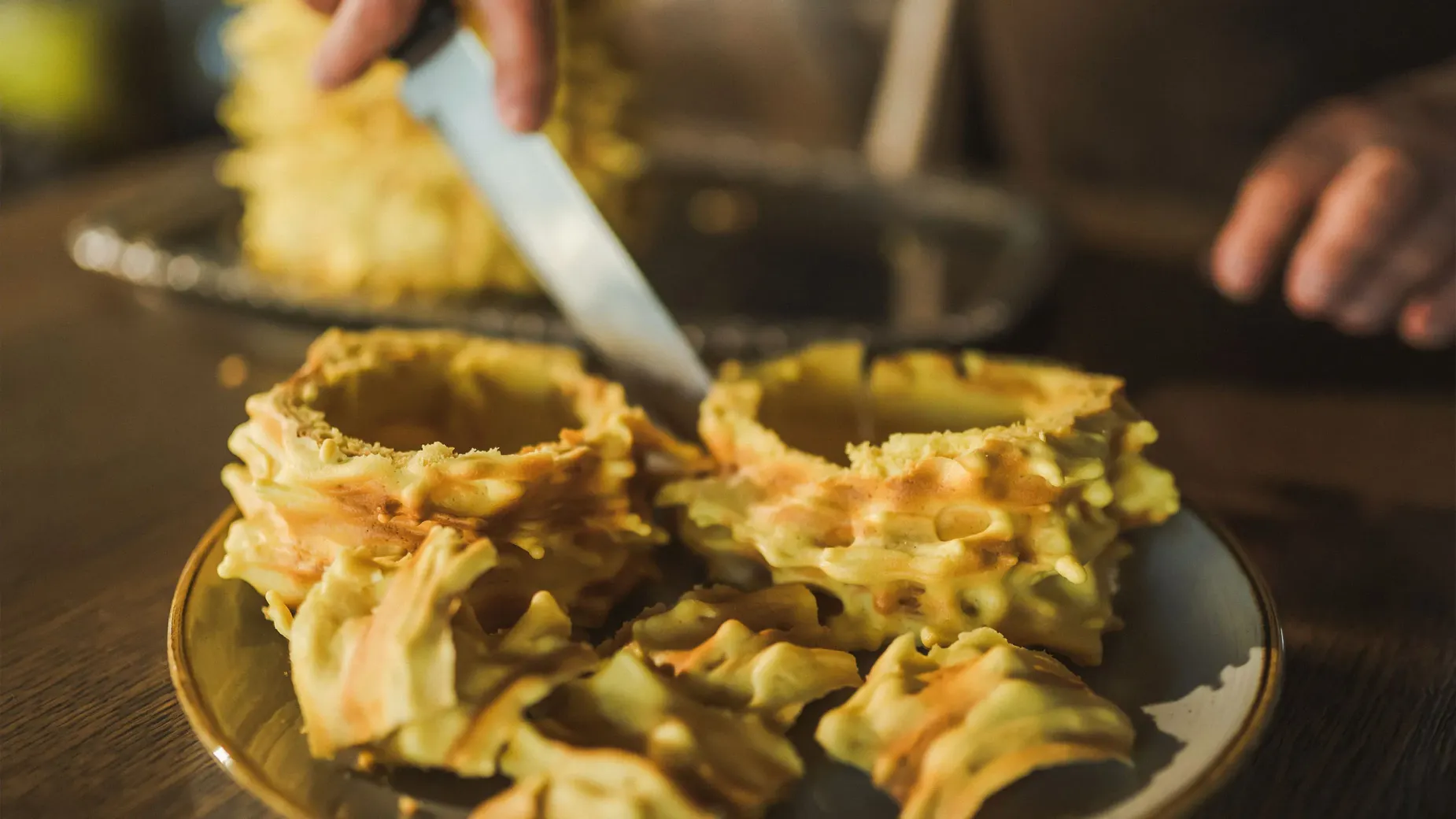
How šakotis is baked
Traditional baking is part craft, part choreography. A metal or wooden cylinder is mounted horizontally and rotated in front of an open fire or another strong heat source. The baker adds batter gradually with a ladle or perforated spoon. Each turn spreads and cooks a new layer before the next one is added.
- The spit is heated and prepared. The mould must turn steadily so the cake builds evenly.
- Batter is added in stages. Pouring too much at once would make it slide away before setting.
- Rotation creates rings. Repeated layers form the growth-ring pattern visible when the cake is cut.
- Heat and gravity create branches. Faster turning, pouring technique and batter consistency influence the length and shape of the spikes.
- The cake is cooled and removed. A finished šakotis must hold its structure without breaking away from the centre.
The method is labour-intensive and difficult to reproduce in an ordinary home oven. That is one reason live baking demonstrations are so memorable: visitors can see how much judgment is involved in controlling the fire, rotation and flow of batter.
Why šakotis belongs at Lithuanian celebrations
For generations, šakotis has been associated with occasions that justify a cake made from many eggs and hours of work. It is particularly connected with weddings, where a tall cake can be shared among many guests and displayed prominently on the table. It also appears at baptisms, anniversaries, Christmas gatherings and gifts taken to relatives abroad.
The cake keeps and travels better than many cream-filled desserts. This helped it become both a celebration food and an edible souvenir. A boxed šakotis is easy to recognise, carries a strong sense of place and can be shared gradually.
Today it exists in many sizes, from small souvenir cakes to elaborate centrepieces. Some versions are pale and delicate; others are deeply browned. A few are decorated with chocolate or sugar, although the classic branch-covered form needs little embellishment.
Inside the Tree Cake Museum near Druskininkai
Romnesa opened the museum in May 2015, when it baked a record-breaking šakotis. The museum describes itself as the first and only museum devoted specifically to tree cake. Its centrepiece is the Guinness World Record cake measuring 3.72 metres and weighing almost 86 kilograms.
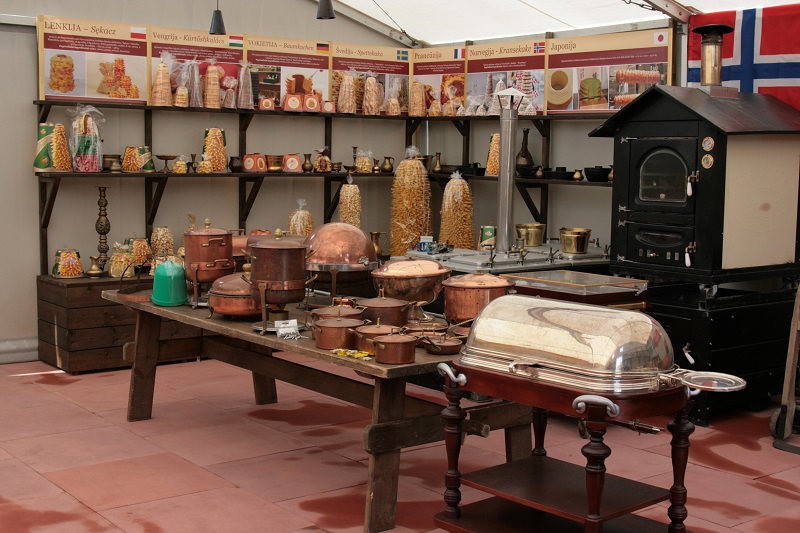
The exhibition goes beyond the record. Visitors can see old dishes, mixing and baking tools, a mobile tree-cake oven used for educational programmes and examples of related spit cakes from countries including Poland, Hungary, Sweden and Japan. The comparison is valuable because it places Lithuania’s cake within a wider international tradition while showing what makes šakotis visually and technically distinctive.
Romnesa also advertises educational baking programmes. Depending on the programme and current schedule, visitors may be able to watch the process, learn how the layers and branches form and taste freshly baked cake. Groups and families should contact Romnesa in advance rather than assume a demonstration is included with an ordinary museum visit.
Practical information for visiting
| Location | Romnesa, Vienkiemių g. 3, Jaskonys, Druskininkai municipality |
|---|---|
| What to see | The record cake, historic equipment, international spit cakes and baking displays |
| Best for | Families, food lovers, cultural travellers and small groups |
| Allow | About 30–60 minutes for the museum; longer for an organised baking programme |
| Before travelling | Confirm current opening hours, admission price and programme availability directly with Romnesa |
The museum is in Jaskonys, outside the central pedestrian area of Druskininkai, so driving, a taxi or a planned group transfer is the simplest option. Romnesa’s website currently lists a small museum admission charge, but prices and opening times can change. Check the official museum page shortly before your visit.
What other Lithuanian foods should you try?
Šakotis makes more sense as part of a wider introduction to Lithuanian cooking. Druskininkai restaurants commonly offer dishes that show the country’s use of potatoes, rye, dairy, beetroot, mushrooms and preserved flavours. Look for:
- Cepelinai: grated-potato dumplings usually filled with meat or curd and served with sour cream.
- Šaltibarščiai: vivid pink cold beet soup with kefir, cucumber, dill and boiled egg, traditionally served with hot potatoes.
- Kugelis: baked potato pudding with a crisp surface and soft, savoury centre.
- Bulviniai blynai: potato pancakes, often served with sour cream or a mushroom sauce.
- Juoda duona: dark rye bread, an everyday staple with deep cultural importance.
- Varškės spurgos: small curd doughnuts with a tender interior.
- Tinginys: an unbaked chocolate-and-biscuit dessert whose name means “lazy one”.
Our broader guide to Lithuanian cuisine in Druskininkai explains where to begin with a traditional meal. Šakotis is an ideal finale—or a souvenir for the journey home.
Combine the museum with a Druskininkai stay
The Tree Cake Museum works well as a cultural stop on a family weekend, a rainy-day plan or part of a food-themed drive around Dzūkija. Pair it with a walk in central Druskininkai, the Aquapark, Snow Arena or one of the resort’s museums. See our guide to things to do near Domi Lini for more ideas.
Domi Lini’s self-catering apartments provide a practical base for exploring the resort and surrounding villages. A kitchen is useful if you return with local bread, cheese, honey or a small šakotis—and the garden offers a relaxed place to share them.
Šakotis is more than an unusual-shaped dessert. Its layers hold the story of craft, celebration and culinary exchange across Europe. At the museum near Druskininkai, that story becomes visible: in the old tools, international cousins, live-fire technique and one extraordinary record-breaking cake.