

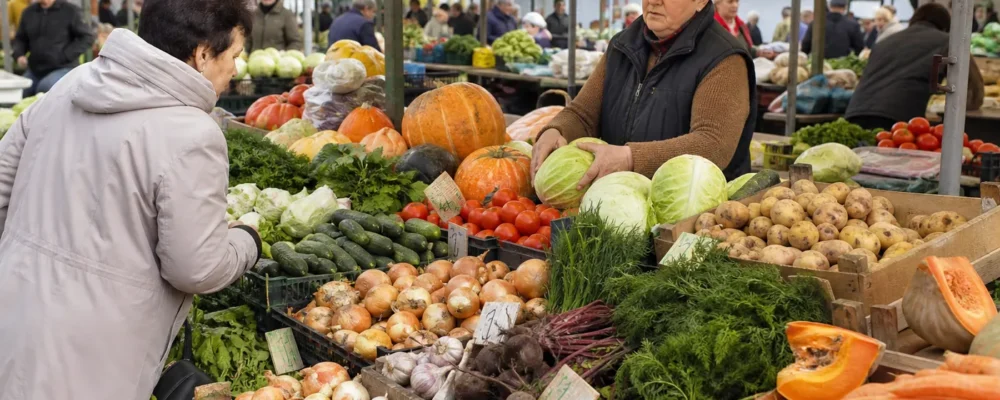
Druskininkai may be best known for mineral-water treatments, pine forests and spa weekends, but there is another way to experience the town: through the food local people bring to market.
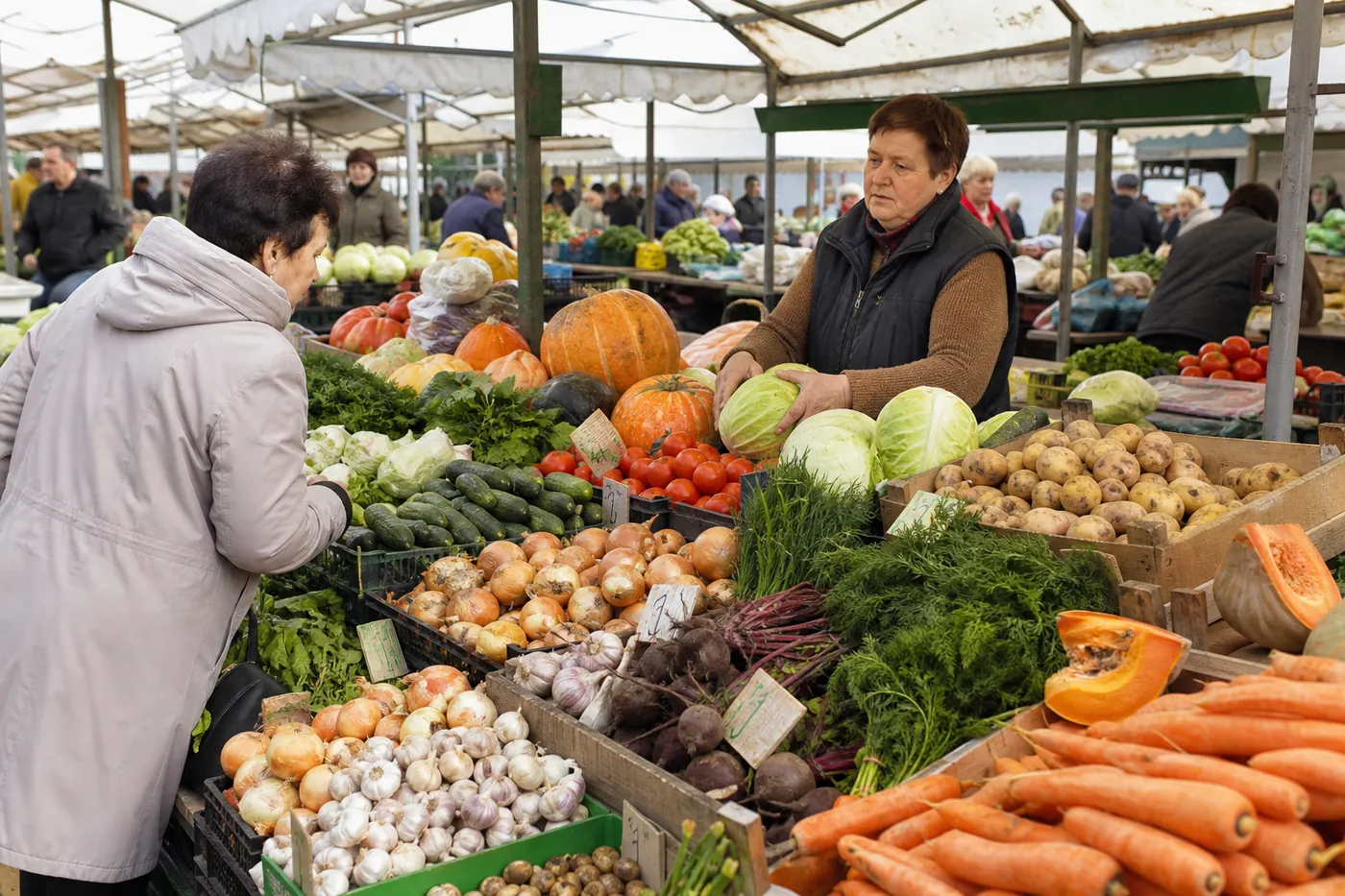
Druskininkai Market is an everyday shopping place where the selection changes with the harvest, the weather and the forests surrounding the resort. One week stalls may be filled with tomatoes, cucumbers and garden herbs; later, baskets of chanterelles, blueberries or apples may take their place.
For guests staying in a self-catering apartment, the market is an opportunity to prepare a simple meal with Lithuanian ingredients, find edible souvenirs and support smaller producers from Druskininkai and the wider Dzūkija region.
What can you buy at Druskininkai Market?
There is no fixed product list because sellers and seasonal availability change. Nevertheless, visitors can commonly expect several broad categories of food.
Seasonal vegetables and fruit
During the warmer months and early autumn, look for potatoes, carrots, beetroot, cabbage, onions, cucumbers, tomatoes, courgettes, pumpkins and fresh herbs. Some sellers bring relatively small quantities from family gardens or nearby farms. Later in the season, the choice may include Lithuanian apples, pears, plums and locally grown berries.
Lithuanian bread and baked products
Dark rye bread is one of the flavours most closely associated with Lithuania. Depending on the day, the market may offer rye loaves, mixed-grain bread, sourdough and products from smaller regional bakeries. Pair it with cheese, smoked meat, honey or fresh tomatoes for an easy Lithuanian-style breakfast.
Cheese and other dairy products
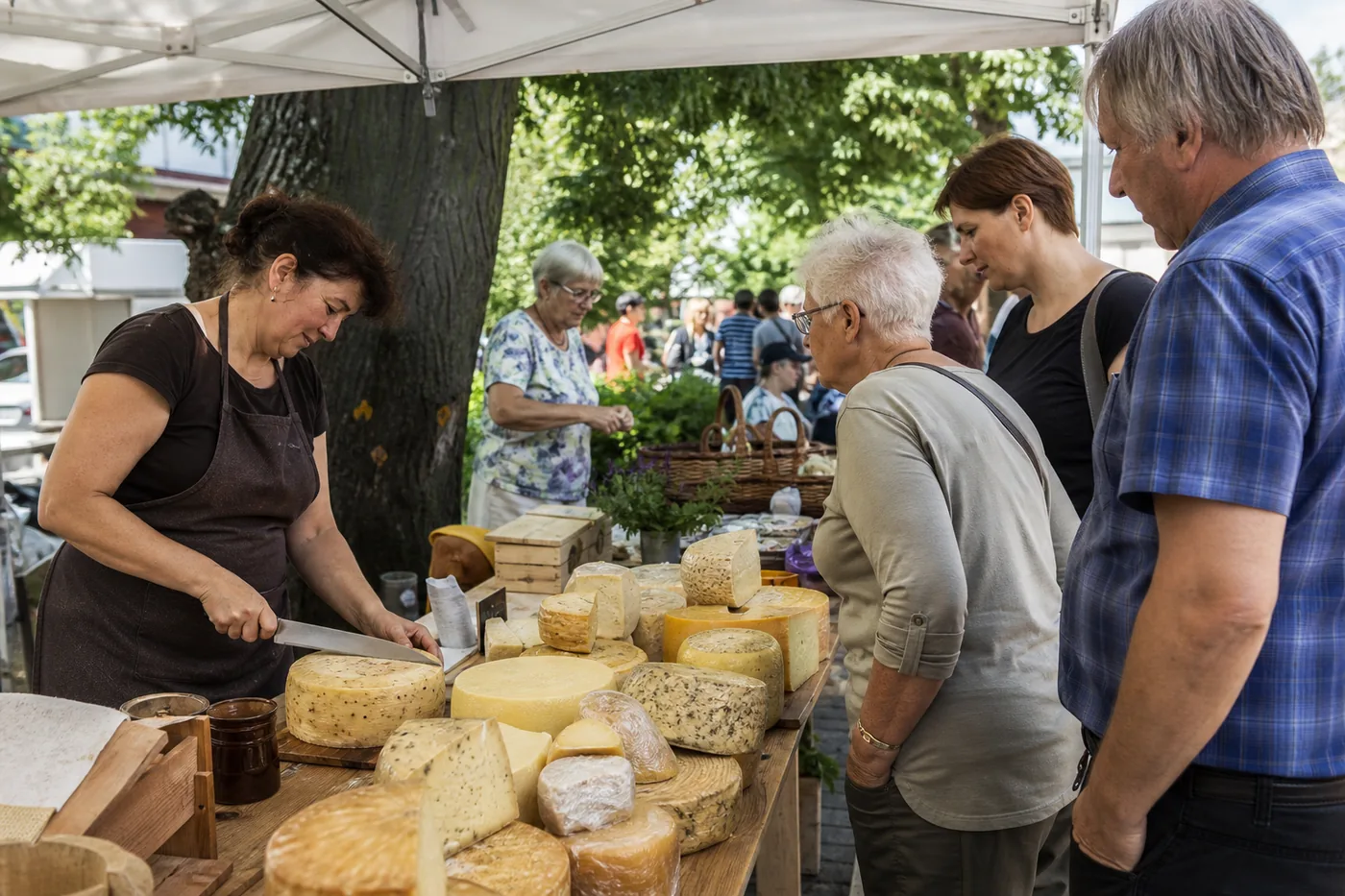
Cheese can range from mild fresh curd cheese to firmer or smoked varieties. You may also encounter sour cream, butter and other traditional dairy products. Ask what milk was used, whether the cheese is fresh or matured and how it should be stored.
If you would like to see where local dairy products come from, combine the market with a visit to family-run Augų Farm near Druskininkai. Our nearby-attractions guide includes the cheese farm among worthwhile half-day experiences. Augų Farm is a separate producer, so this does not imply that every cheese at the market comes from the farm.
Meat and smoked products
Indoor stalls and kiosks may offer fresh meat, sausages, bacon and smoked products. Check the label or ask about the producer and origin. Fresh meat and perishable sausages should be carried in an insulated bag during warm weather and refrigerated promptly.
Honey, preserves and pantry products
Possible finds include honey from smaller apiaries, jams, pickled cucumbers, fermented cabbage, dried herbs, herbal teas, bee pollen and bee bread. These are convenient choices when you want a local product that travels more easily than fresh produce.
Forest mushrooms and berries: a taste of Dzūkija
Forests are central to the identity of Dzūkija. During the right part of the year, sellers may offer freshly gathered chanterelles, porcini and other edible mushrooms, as well as blueberries, wild strawberries, lingonberries or cranberries.
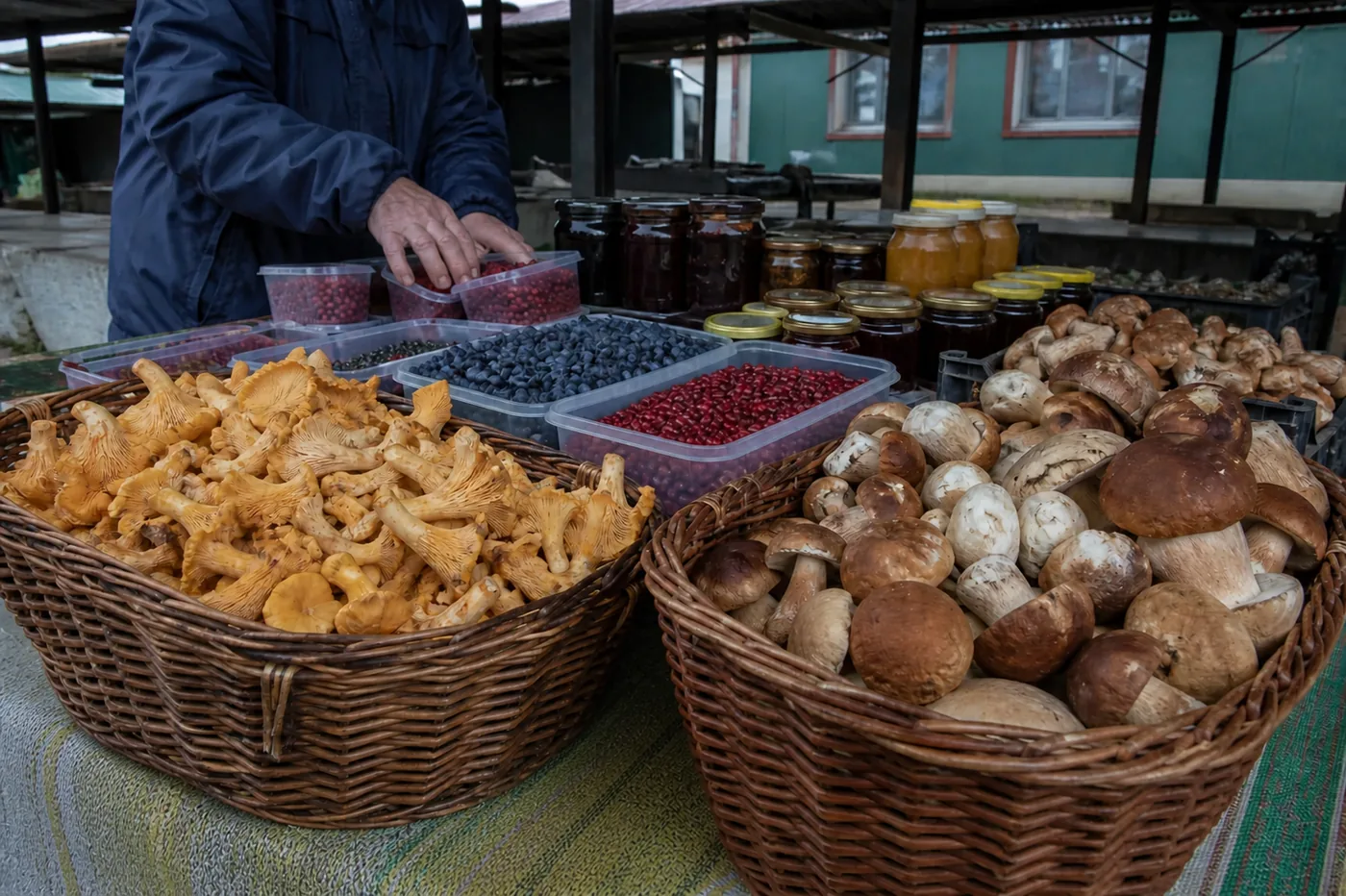
Availability cannot be promised in advance. It depends on rainfall, temperature and the progress of the forest season. Buy wild mushrooms only from established sellers, ask for the name if you are unfamiliar with a variety, and clean, refrigerate and cook them promptly.
Is the produce organic?
Local, home-grown and natural are not automatically the same as certified organic. Some sellers may use traditional or low-intervention methods without formal certification; others may offer certified products. If certification matters to you, ask directly and look for the EU organic logo, the Lithuanian organic mark or valid producer documentation.
Useful questions to ask
- Where was this grown or produced?
- Is it from your own farm or garden?
- When was it harvested or made?
- Does it need refrigeration?
- How do local people prepare it?
- Is it certified organic?
When should you visit?
Morning is normally the best time: the choice is broader, perishable produce is fresher and seasonal mushrooms or berries may sell out later. The market is in the M. K. Čiurlionio Street market area, currently listed at number 111. Published hours vary, so check current information before making a special journey. Allow approximately 30–60 minutes for a relaxed visit.
A simple market meal at Domi Lini
Domi Lini’s apartments make a market visit especially practical because guests can prepare their own food. A simple basket might contain Lithuanian rye bread, local cheese or smoked meat, tomatoes, cucumbers, herbs, seasonal berries and a jar of honey. When mushrooms are in season, fry them with onions and serve with potatoes.
Druskininkai Market provides a different view of the resort. Visit early, ask where products came from and let the season decide what goes into your basket.