

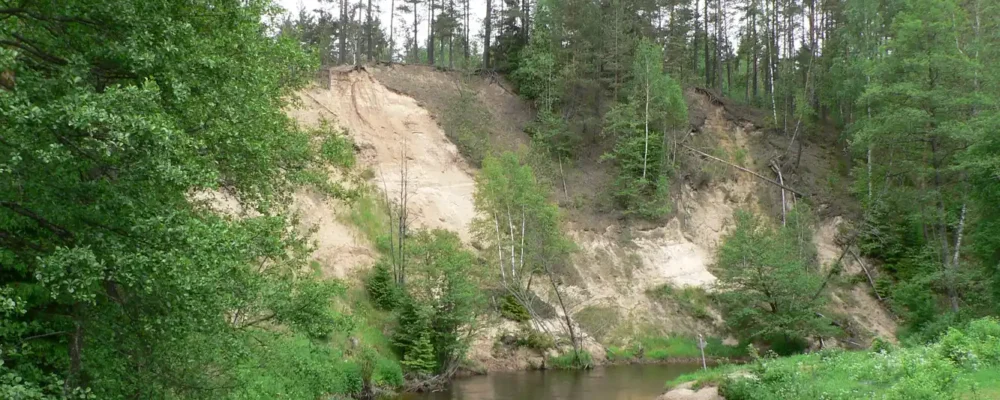
Druskininkai is known for spas, pine forests and the Nemunas, but some of southern Lithuania’s most memorable landscapes are best seen from a canoe or kayak. Within driving distance of the resort, you can choose between the gentle current of the Merkys, the high sandy banks and old villages of the Ūla, the tight bends of the Grūda, or the borderland rivers and lakes around Veisiejai and Kapčiamiestis.
Local providers commonly use the Lithuanian word baidarė, which is usually a two-person touring kayak. English-language listings may describe the same activity as either canoeing or kayaking. Whichever word is used, the usual service includes the boat, paddles, buoyancy aids and transport connected with the chosen route. The exact package varies, so confirm every inclusion when booking.
This guide compares the main rivers near Druskininkai, explains how the booking and transfers work, covers the special rules for the Ūla, and provides a practical checklist for the day.
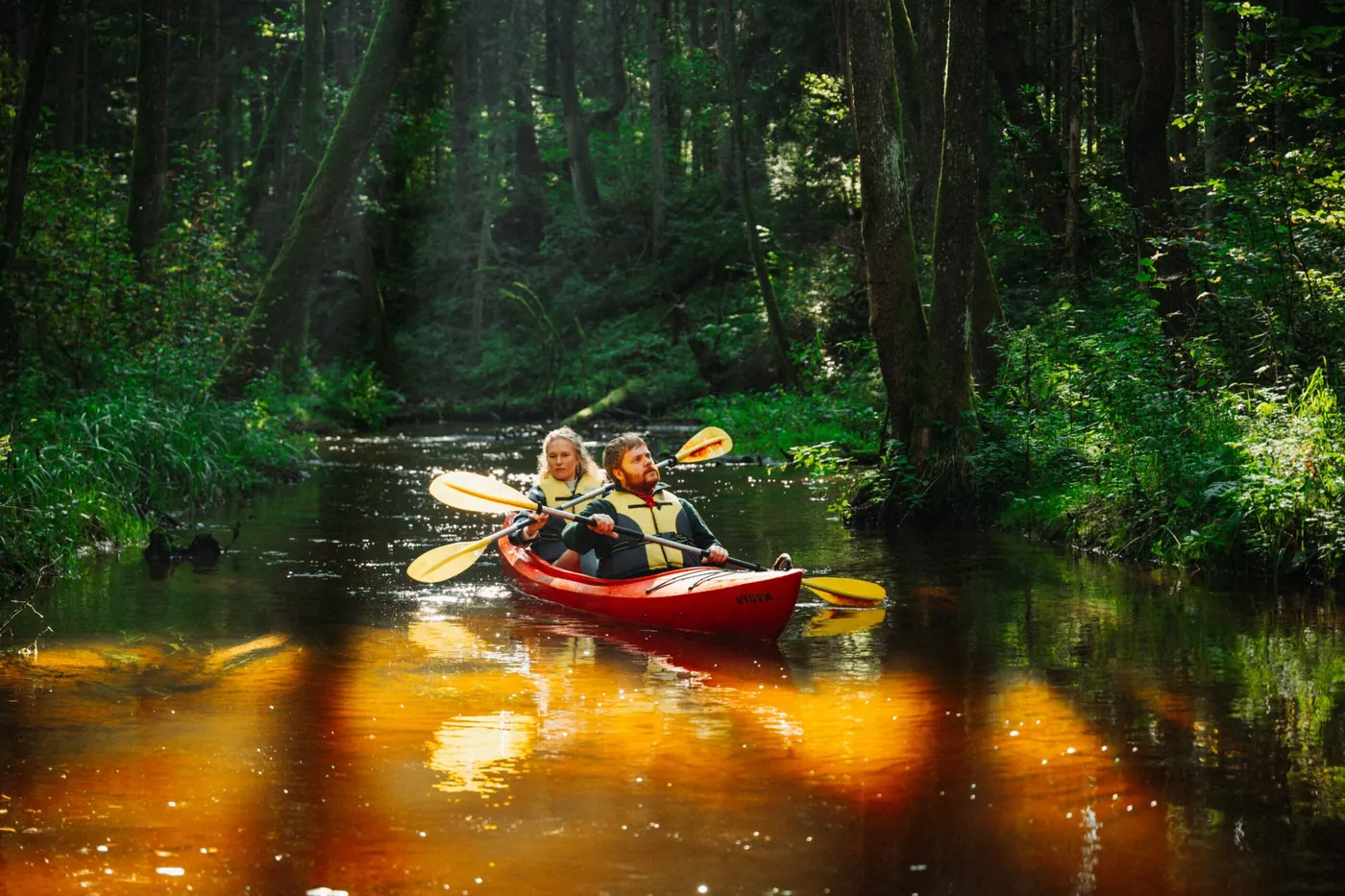
Which river should you choose?
| River | Character | Best for | Typical trip idea |
|---|---|---|---|
| Merkys | Wider, steadier and generally less obstructed | First-timers, families and relaxed groups | A short section towards Merkinė or part of a two-day journey |
| Ūla | Winding, scenic and enclosed by forest, sandy banks and old villages | Paddlers wanting classic Dzūkija scenery and culture | Kašėtos–Zervynos or a route beginning at Zervynos |
| Grūda | Narrow, very winding and more technical, with natural obstacles | Active adults and paddlers with some experience | Marcinkonys towards Kašėtos or Puvočiai, sometimes continuing on the Merkys |
| Baltoji Ančia | A varied southern route with bends, current and optional harder sections | Families on selected sections; adventurous groups on the lower river | A short trip near Kapčiamiestis or a longer multi-day route |
| Zapsė | Shorter river-and-lake landscape | Beginners and travellers wanting a gentler half-day outing | Zapsys Lake towards Lake Veisiejis |
| Mara | Remote borderland river with a livelier current | Confident paddlers who enjoy quiet, less developed surroundings | A day route along the Lithuanian–Polish border |
| Nemunas | Broad, open river with long views and more exposure to wind | Travellers wanting to paddle closer to Druskininkai | Švendubrė–Druskininkai or Druskininkai–Liškiava, subject to current operator availability |
Distances, duration and difficulty change with the precise start point, water level, fallen trees, wind and the pace of the group. Treat advertised timings as planning estimates rather than guarantees.
Merkys: the most forgiving choice for beginners
The Merkys is the largest river in Dzūkija and generally the easiest of the three best-known national-park rivers. It is wider than the Ūla, has fewer obstacles and is suitable for travellers who want to enjoy the forest landscape without steering through a new bend every few seconds.
Operators offer numerous sections between the Varėna area, Puvočiai and Merkinė. A short route can work for a first outing, while a longer journey can be divided across two days with an overnight stop at an official campsite. Ending near Merkinė adds the option of visiting the hillfort and the national park visitor centre.
Choose the Merkys if your group includes beginners, if conversation and scenery matter more than technical paddling, or if you are unsure how much energy everyone will have. It is still a natural river: wear a buoyancy aid and expect conditions to change after rain or strong wind.
Ūla: the classic scenic canoe trip through Dzūkija
The Ūla is one of Lithuania’s best-known paddling rivers. It curves through pine forest, below sandy banks and past traditional Dzūkian villages. The current helps carry the canoe, but frequent bends, branches and occasional fallen trees mean that paddlers must stay attentive.
Popular sections include Kašėtos–Zervynos and routes beginning at Zervynos and continuing downstream towards Mančiagirė, Trakiškiai, Žiūrai or the confluence with the Merkys. Ask the operator to match the exact section to your experience. A distance that looks short on a map can feel much longer when the river is narrow and constantly changing direction.
The Ūla permit: book this river early
Paddling the Ūla inside Dzūkija National Park is regulated to protect the Ūla Landscape Reserve and its Natura 2000 habitats. For the 2026 season, non-motorised boats, canoes and kayaks are permitted from 1 May to 30 September, and paddlers in the national-park section need an Ūla water-route ticket. The number of paddlers is limited to 200 per day.
The published 2026 price is €10 per person on Saturdays and €6 on other days. Children under six and people with disabilities are admitted free. Tickets can be bought online through the official protected-areas ticket link. Rules and prices can change, so check them again for your actual date.
When reserving a canoe, ask whether the operator purchases the Ūla ticket for the group or whether you must buy it yourself. Do not assume the rental price includes it. Keep the ticket available during the trip; the park recommends carrying a printed copy.
Zervynos: allow time for the village, not only the river
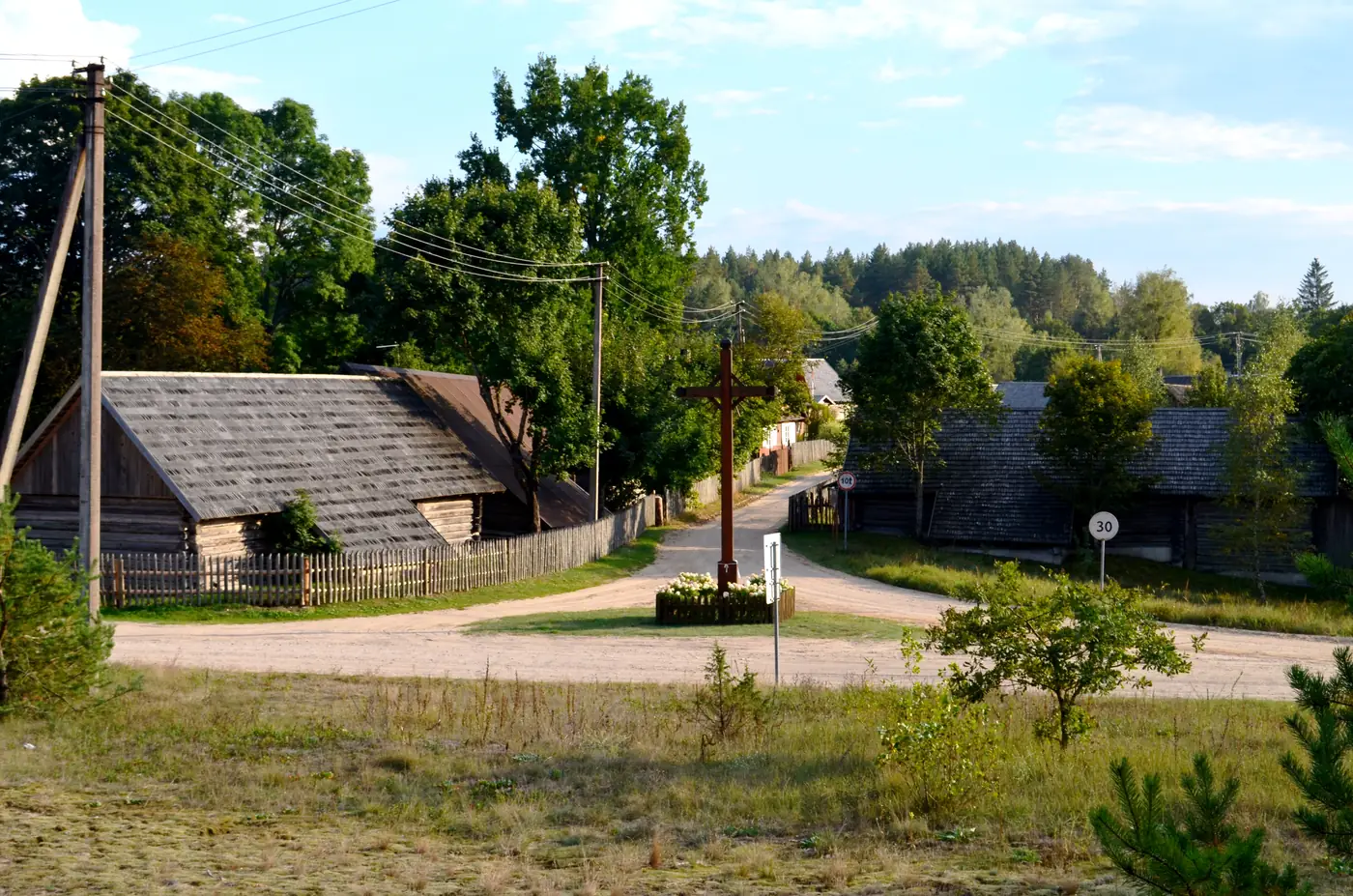
Zervynos is more than a convenient launch or finish point. It is an inhabited ethnographic village beside the Ūla, first mentioned in written sources in 1742. Its freely arranged street-village plan contains 48 homesteads and preserves a layout formed in the eighteenth and nineteenth centuries. Eight homesteads are protected architectural monuments. The surrounding area also contains evidence of camps from the Mesolithic, Neolithic and Bronze Age.
The village’s wooden buildings, sandy lanes and relationship with the forest make it one of the most atmospheric places on an Ūla itinerary. Lithuanian films including Niekas nenorėjo mirti and Faktas were filmed here. If your route starts or ends in Zervynos, allow at least 45–60 minutes rather than leaving immediately with the transport van.
Remember that Zervynos is a living village, not an outdoor museum. Stay on public roads and paths, do not enter yards or buildings without permission, park without blocking residents, and ask before photographing people. Services may be limited, so bring water and food rather than relying on finding a café.
Grūda: narrow, twisting and more demanding
The Grūda is a better choice for paddlers who want a more active day. It is narrow, repeatedly changes direction and can contain fallen trees, low footbridges and a rockier lower section. The river passes Marcinkonys and eventually meets the Merkys, allowing operators to combine a technical first section with an easier finish.
This is not the best default choice for very young children, nervous beginners or anyone expecting a passive float. Ask about current obstructions and water level, because the character of a small river can change quickly after storms or forestry work. For a two-day trip, one practical combination is the Grūda followed by the Merkys.
Baltoji Ančia, Zapsė and Mara: the southern borderland alternatives
South-west of Druskininkai, the Veisiejai and Kapčiamiestis area offers a different group of routes. The official Druskininkai tourism directory lists the Baltoji Ančia, Zapsė and Mara among the region’s canoeing options.
The Baltoji Ančia flows out of Lake Ančia and passes Kapčiamiestis. Operators divide it into short family-friendly sections and longer, more demanding stretches. Depending on the route, expect bends, current, low obstacles and the possibility of getting your feet wet. Longer itineraries may involve a portage near the hydroelectric facility, so confirm whether your selected section includes carrying the canoe.
The Zapsė connects lake landscapes around Veisiejai and can suit beginners looking for a shorter outing. Aquatic vegetation and seasonal water levels can slow the upper section, so current local advice matters more than an old route description.
The Mara, also known in Poland as the Marycha, follows the Lithuanian–Polish border and finishes close to the meeting point of three national borders. It feels remote and can have a faster current. Carry a valid passport or national identity card, follow the operator’s route instructions precisely and do not continue beyond the agreed finish.
What about canoeing on the Nemunas?
The Nemunas runs directly through Druskininkai and offers a broad, open-water alternative to the smaller forest rivers. Route maps list sections such as Švendubrė–Druskininkai and Druskininkai–Liškiava, while the local tourism office currently advertises a three-hour paddleboard trip from Švendubrė to Druskininkai.
Availability of canoes on a particular Nemunas section can vary, so ask local providers what they are operating on your dates. Wind has a greater effect on a wide river, and the experience is less sheltered than on the Ūla or Merkys. It is a useful option if you want to stay closer to town and see the resort landscape from the water.
How to book a canoe trip near Druskininkai
The simplest starting point is the official Druskininkai canoe-trips directory, which lists rental companies and contact details. Contact at least one provider directly by phone, email or its booking form. For summer Saturdays, large groups and the Ūla, reserve well in advance.
Send the operator the following information:
- Your preferred date and whether it can change.
- The number of adults and children, plus children’s ages.
- Whether anyone is paddling for the first time.
- The desired duration: two or three hours, a full day, or multiple days.
- Whether you want a calm, scenic route or a more technical river.
- Whether you have your own car and where you are staying.
Before paying, confirm exactly what the price includes:
- one- or two-person canoe or kayak;
- paddles and correctly sized buoyancy aids;
- child seat, if required;
- transport to the start and collection from the finish;
- secure parking;
- waterproof bag or phone case;
- luggage transfer for an overnight journey;
- campsite, firewood, sauna or other extras;
- Ūla water-route ticket, if applicable;
- cancellation or rerouting rules if weather or water conditions become unsafe.
Ask for the precise meeting point, start and finish coordinates, expected duration and an emergency contact number. Rural launch points are not always obvious, and mobile coverage can be inconsistent. Download the map before leaving Druskininkai.
Canoeing preparation checklist
Wear
- quick-drying layers suited to the forecast;
- secure shoes that can get wet—no loose flip-flops;
- a light rain jacket even when the morning looks clear;
- a hat, sunglasses with a retaining strap and sunscreen;
- the provided buoyancy aid for the entire time on the water.
Pack in a waterproof bag
- a complete dry change of clothes, including socks;
- drinking water and enough food for the planned duration;
- personal medicines and a small first-aid kit;
- insect and tick repellent;
- a charged phone, waterproof case and power bank;
- identity documents, especially for border routes;
- the Ūla ticket when required;
- a small towel and a bag for all rubbish.
Confirm before launching
- the route, finish point and approximate paddling time;
- current river conditions and the weather forecast;
- how to steer, stop and safely exit the canoe;
- what to do after a capsize;
- who sits in front and who controls direction from the rear;
- the youngest or least confident paddler’s needs;
- the location of official rest areas and campsites.
Avoid alcohol before and during the trip. Tie down or waterproof anything you cannot afford to lose, and leave unnecessary valuables at your accommodation.
Respect the national park and river communities
Inside Dzūkija National Park, camp and light fires only in designated places. Do not climb or damage sandy banks, disturb wildlife, leave rubbish or cut vegetation. Use official landing points where provided and respect private property in riverside villages.
These small choices help preserve the quiet landscape that makes the journey worthwhile—and reduce conflict between visitors and the people who live along the route.
Make Domi Lini your base for a canoeing break
Domi Lini provides a comfortable self-catering base in Druskininkai for exploring southern Lithuania. You can prepare breakfast and food for the river before leaving, spend the day on the Ūla, Merkys, Grūda or a southern borderland route, and return to the resort for a relaxed evening.
If you are planning a longer active stay, combine canoeing with cycling routes around Druskininkai or use our family weekend guide to balance the river trip with easier attractions. You can also explore things to do near Domi Lini and compare the available apartments on the Rooms & Rates page.
Druskininkai does not have one single “best” canoe route. The right choice depends on the group: the Merkys for an easier introduction, the Ūla for classic scenery and Zervynos, the Grūda for a more technical day, or the Baltoji Ančia, Zapsė and Mara for a quieter borderland journey. Choose honestly, reserve the logistics in advance and arrive prepared to get wet.