

Druskininkai is best discovered on foot. Just a few minutes from Domi Lini, a quiet route leads past wooden villas, former guesthouses and spa buildings that recall the years when visitors came to “take the waters” for an entire summer.
Wooden architecture in Druskininkai: practical details
- Distance: about 4–5 km
- Walking time: 1.5–2 hours, excluding museum visits
- Start: Domi Lini, Šlaito g. 4
- Best time: morning or late afternoon
This is a flexible self-guided route, so you can shorten it to suit your day. Some buildings remain private homes or accommodation; admire them from public streets and respect the residents’ privacy.
1. Villas Imperial and Niespodzianka
From Domi Lini, cross the bridge and continue towards Maironio Street. At numbers 14 and 16 stands one of the town’s most interesting interwar ensembles. Villa Imperial, built in 1926, echoes Swiss spa architecture with an asymmetrical form, steep multi-pitched roof, decorated gables and a small tower. Its neighbour Niespodzianka has delicate fretwork and a more romantic character. Open the location in Google Maps.
2. Villa Maurė
Continue towards Laisvės Square to find Villa Maurė, built around 1900. Its defining feature is a semi-open gallery with arches, slender columns and intricate wooden ornament. It shows how Russian decorative influences, historicism and the imagination of a summer resort could meet in one building. Open the location in Google Maps.
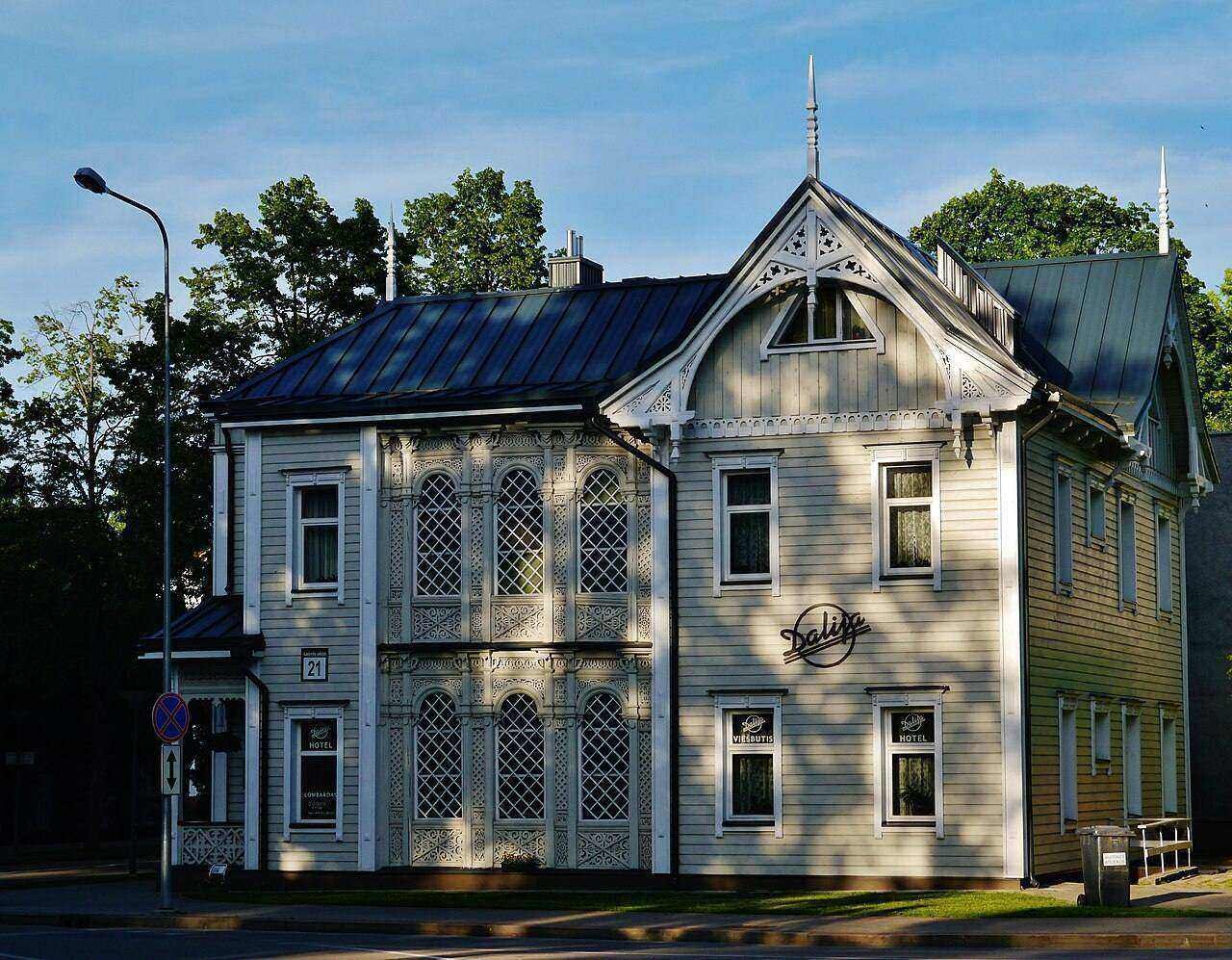
3. Former treatment buildings and the old spa centre
Walk through the historic centre and look for verandas, carved trim, turrets, dormers and steep roofs. These details were not merely decorative. Sheltered verandas allowed spa guests to sit outside and breathe the pine-scented air even in uncertain weather. Nearby, the former treatment complex now occupied by Europa Royale and the Dainava buildings add another layer to the resort story, although not every part is wooden.
4. Villa Radium
Continue towards T. Kosciuškos Street, close to the Aquapark. Villa Radium is one of Druskininkai’s most expressive surviving wooden resort buildings. Built during the Polish interwar period, it combines Swiss-style romanticism with a playful asymmetrical composition, towers, galleries and carved timber details. Its name reflects the early-20th-century fascination with radium and research into the resort’s mineral waters. The villa now provides accommodation; admire the exterior from the public street. Open the location in Google Maps.
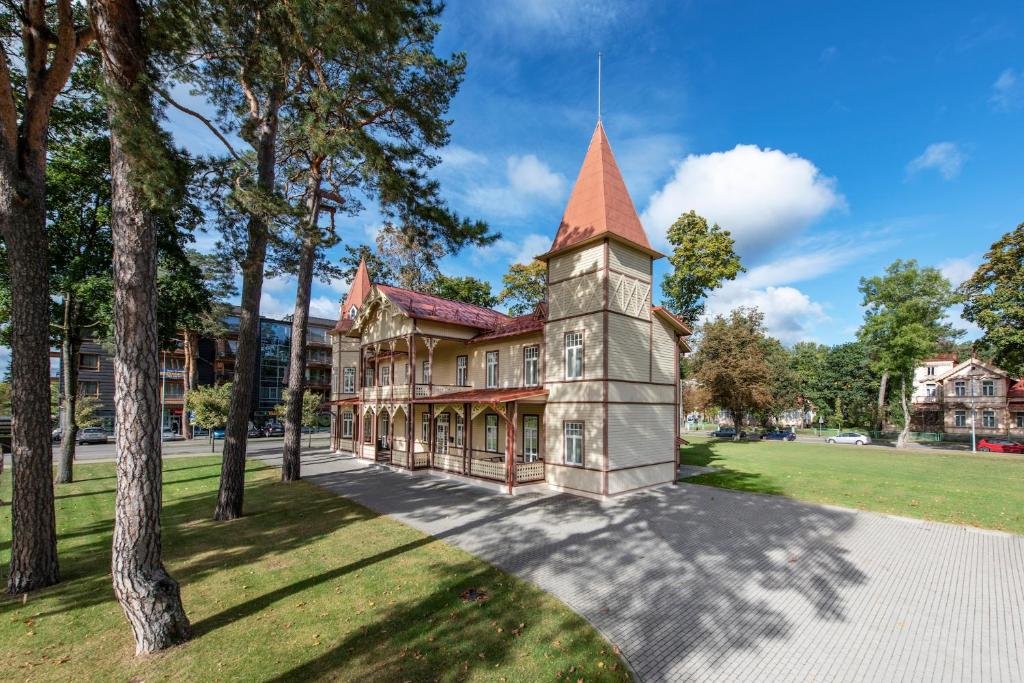
5. Villa Oazė and its neighbour at V. Krėvės 4
Finish at V. Krėvės Street. The villas at numbers 4 and 6 were built around 1930 and were probably designed by the same architect. Oazė was advertised as a modern guesthouse with spacious verandas, a large dining room, a piano and bathrooms—details that signalled comfort and high standards at the time. Open the location in Google Maps.
What to notice along the way
Look closely at carved window surrounds, balustrades, gables, dormers and the contrast between formal street façades and garden elevations. Druskininkai’s wooden villas combine Swiss, Zakopane, Russian and historicist influences. This variety reflects the owners’ travels, the changing history of the region and the practical needs of a health resort.
Official map and ideas for the rest of the day
The official Druskininkai wooden-architecture route provides a broader list of buildings and a map. You can pair this walk with our guide to museums and culture in Druskininkai, or arrange a more detailed visit using our article about tour guides and themed tours.
Domi Lini tip: ask us after arrival about current renovations and opening hours. Wooden architecture photographs especially well in the soft light of early morning or before sunset.