

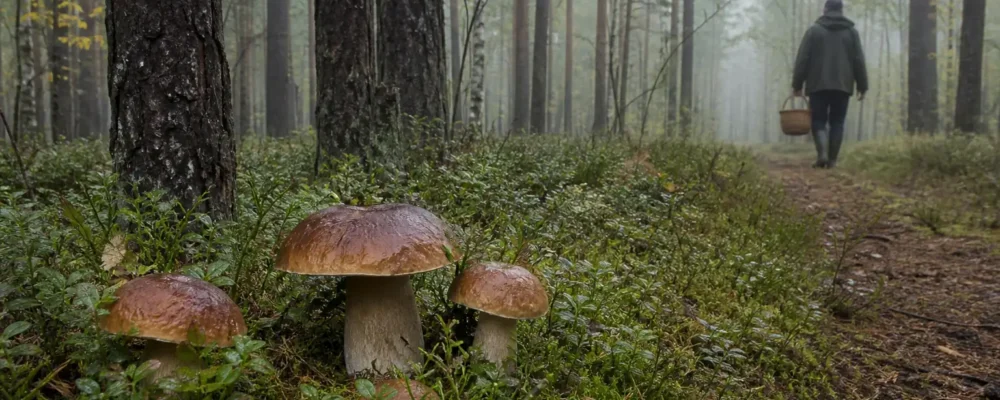
In southern Lithuania, a walk in the forest can become breakfast, dinner and a lesson in local culture. Around Druskininkai, the broad pine forests of Dzūkija are not simply scenery. For generations, they have supplied local families with berries, herbs and, above all, mushrooms.
Mushroom picking is sometimes jokingly described as Lithuania’s second national sport after basketball. In Dzūkija, however, it has always meant more than recreation. It is inherited knowledge: when to enter the forest, where different species prefer to grow, how to recognise a healthy mushroom and how to preserve the harvest for winter.
For visitors staying at Domi Lini, mushroom season offers a memorable way to experience the landscape beyond the resort centre—provided that the forest is approached with care, preparation and respect.
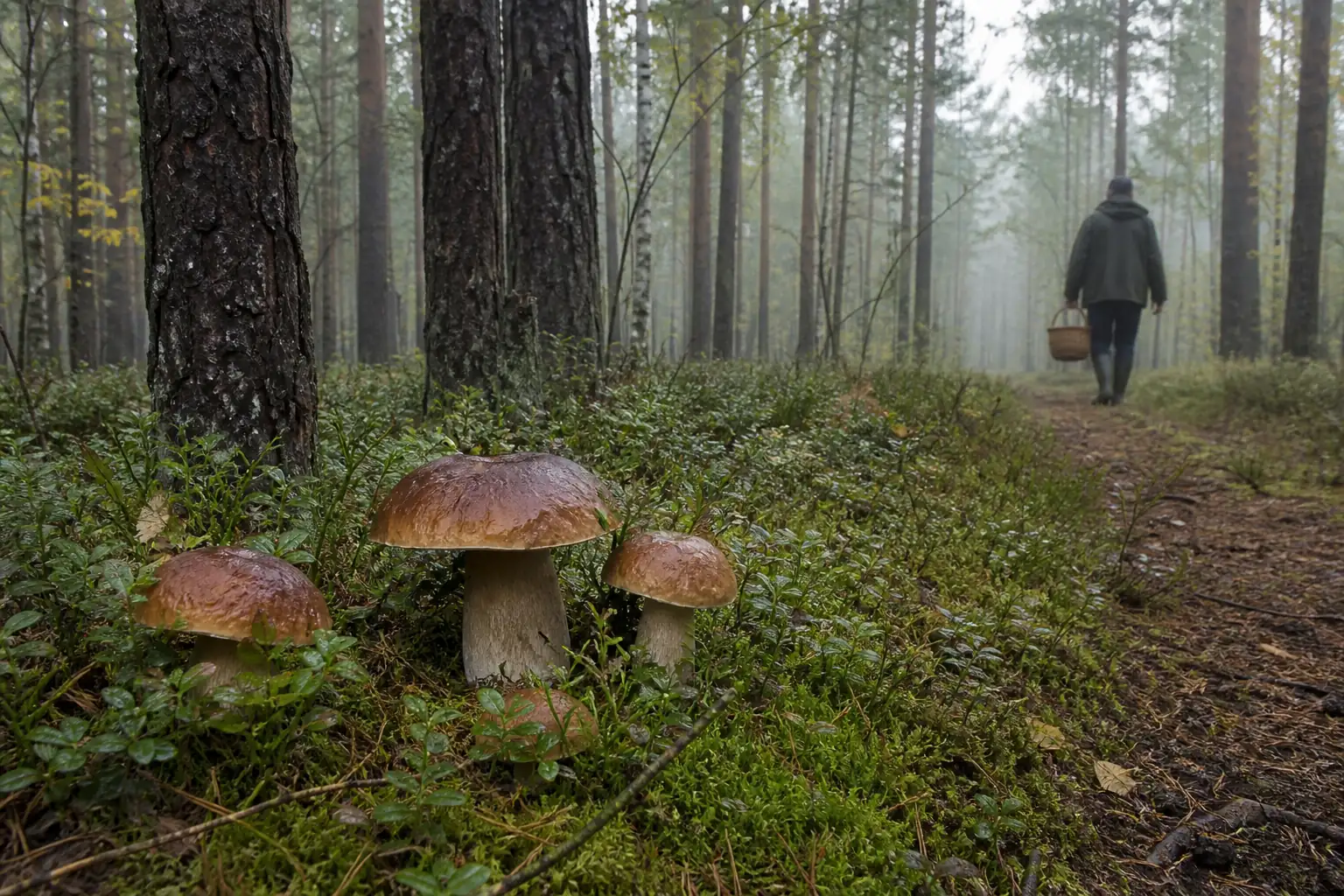
Why Dzūkija is Lithuania’s mushroom country
Druskininkai lies in the forested south of Lithuania, close to the wider Dainava Forest and Dzūkija National Park. Sandy soils and extensive pine woodland create favourable habitats for many mushroom species. Lithuania’s protected-areas authority describes the national park’s forests as among the most mushroom-rich in the country, while the collection of mushrooms, berries and medicinal plants remains part of Dzūkija’s living ethnographic heritage.
The old regional saying that mushrooms and berries helped clothe the daughters of Dzūkija recalls a time when forest produce was an important source of household income. Families sold fresh mushrooms, dried them for winter and passed good collecting places from one generation to the next. The economic role has changed, but the seasonal rhythm remains: after warm rain, baskets appear and conversations quickly turn to who has found the first baravykas.
What mushrooms do local pickers look for?
The season depends on rainfall and temperature rather than a fixed calendar. Chanterelles can begin appearing in summer, while the richest mixed harvests often arrive from late summer into autumn.
Among the most sought-after mushrooms are:
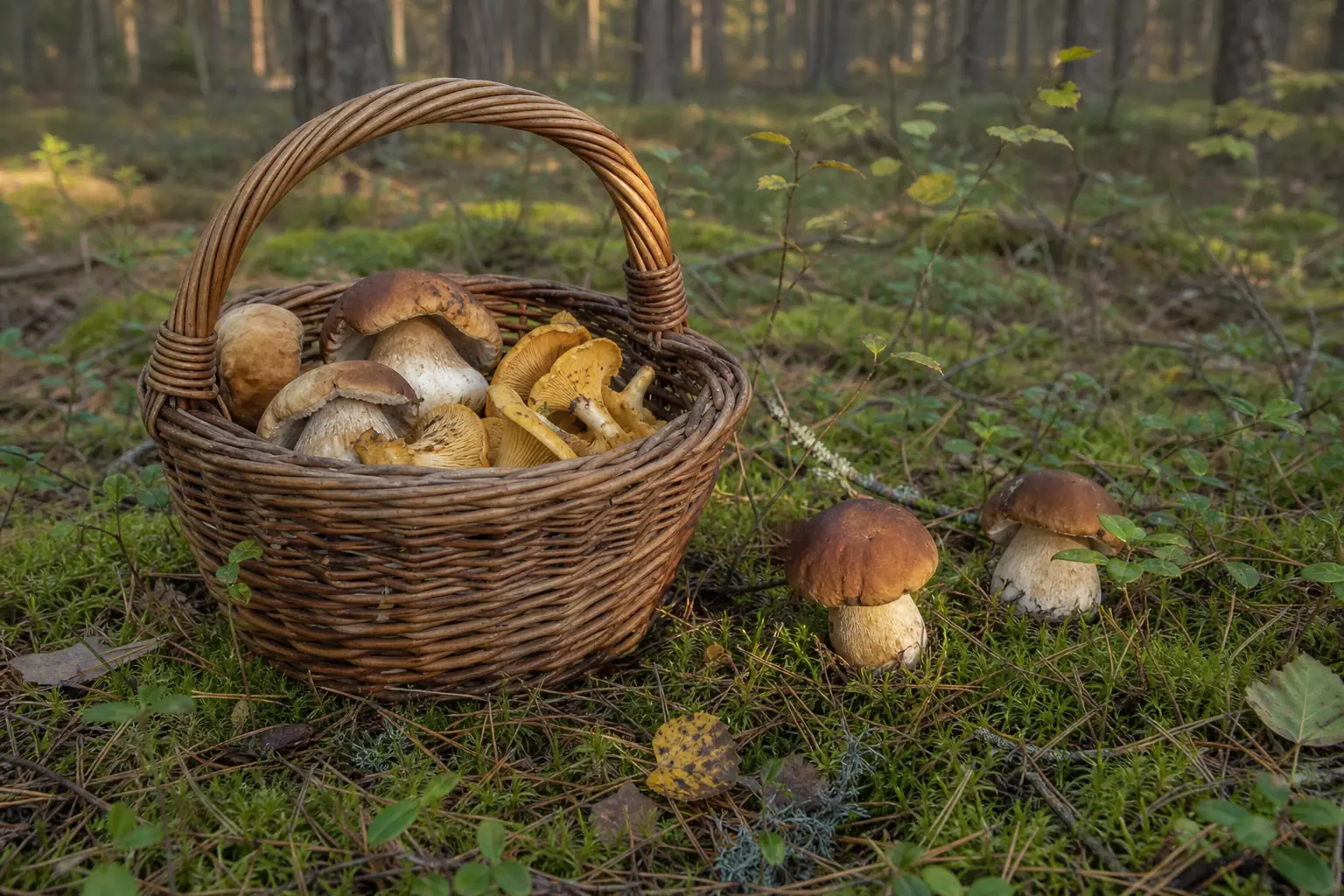
- Porcini or penny buns (baravykai): the prestige find of a Dzūkian basket, valued fresh and dried for their deep aroma.
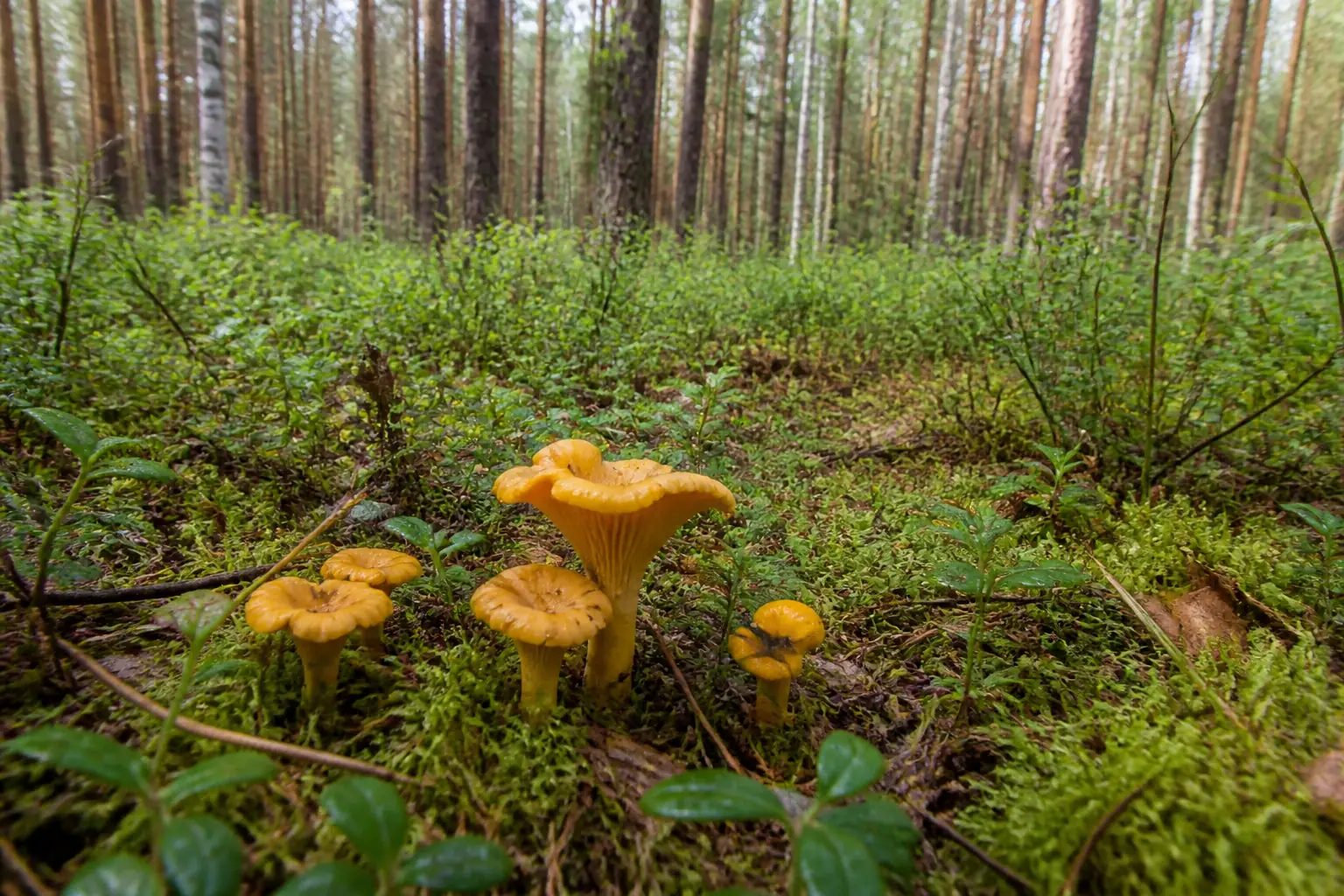
- Chanterelles (voveraitės, traditionally lepeškos in Dzūkija): golden, firm mushrooms commonly cooked in a creamy sauce.
- Bay and variegated boletes: familiar inhabitants of coniferous woodland, although identification still requires experience.
- Saffron milk caps (rudmėsės): particularly associated with suitable pine habitats and appreciated fried or preserved.
Names vary by region and family, which is part of the tradition—but folk names are not a safe identification system for beginners. Never eat a wild mushroom unless a knowledgeable person has identified it with certainty. A mobile application or a photograph alone is not sufficient.
The Lithuanian Mushroom Picking Championship
The playful claim that mushroom picking is a national sport becomes literal in Varėna district, north-east of Druskininkai. The annual Lithuanian Mushroom Picking Championship is held as part of the region’s Mushroom Festival, with the forest competition traditionally taking place around Marcinkonys or another local village.
Teams head into the Dainava Forest early in the morning and return with baskets to be weighed and judged. The event is not only about speed or quantity. It brings together Dzūkian dialect, music, crafts, regional food and practical forest knowledge. Varėna Municipality reported that the 2025 festival included the 22nd Lithuanian championship, showing how firmly the competition has become established.
Dates, location and registration rules can change, so travellers should check the current programme published by Varėna Municipality or its tourism organisations before planning a trip around the event.
How to forage responsibly and safely
In Lithuania, people may generally gather mushrooms in forests, but nature reserves and temporarily restricted areas are exceptions. Within Dzūkija National Park, for example, mushroom picking is not permitted in the Skroblus, Musteika and Povilnis strict reserves. Observe signs, protected-area rules and temporary closures, and do not enter areas where forestry or forest-protection work is taking place.
Before setting out:
- go with an experienced local picker or guide if you are a beginner;
- use a breathable wicker basket rather than a sealed plastic bag;
- carry a charged phone, offline map, water and weather-appropriate clothing;
- tell someone where you are going and agree on a return time;
- check for ticks after the walk and use suitable repellent;
- collect only mushrooms you can identify with complete confidence;
- leave rare, damaged and unknown specimens undisturbed;
- park only where permitted and take every piece of litter home.
Do not rely on myths such as tasting a mushroom, watching whether it changes colour or seeing whether insects eat it. Poisonous species can resemble edible ones. If illness follows a mushroom meal, seek urgent medical help and retain any uncooked mushrooms or food remains for identification.
From the forest basket to the Dzūkian table
The harvest is only half of the experience. Dzūkian cooks use mushrooms in soups and stews, creamy sauces, pastries and dumpling fillings. They also dry, salt, pickle or marinate them for the colder months.
Popular dishes and flavours include:
- baravykienė, a fragrant porcini soup;
- chanterelles cooked with onion and sour cream, often served with potatoes;
- dried-porcini sauce for potatoes, buckwheat dishes or Christmas Eve food;
- dumplings, buns and pastries filled with mushrooms;
- šiuškės, a Druskininkai-associated potato dish served with a Dzūkian porcini sauce.
This forest cuisine belongs to a broader regional table. Our guide to Lithuanian cuisine in Druskininkai introduces other dishes worth trying. During the season, the Druskininkai open market can also be a useful place to look for local produce and legally sold mushrooms when you would rather cook than forage.
A practical autumn experience from Domi Lini
You do not need to return with a full basket for the walk to be worthwhile. The scent of warm pine needles, quiet tracks and the excitement of spotting one perfect porcini can become a highlight of an autumn stay.
Domi Lini offers a calm base for exploring Druskininkai and the surrounding region in every season. If mushroom picking is part of your plan, ask local tourism specialists about guided walks and current conditions, respect protected areas, and treat every meal from the forest as the result of knowledge—not luck alone.