

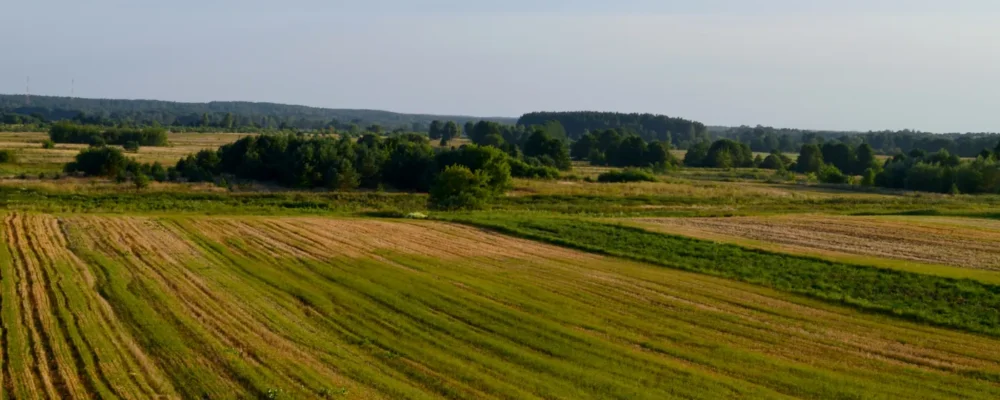
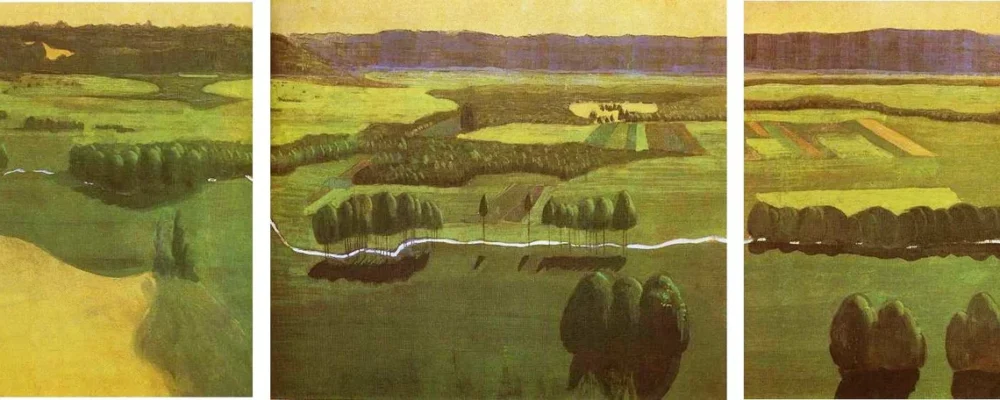
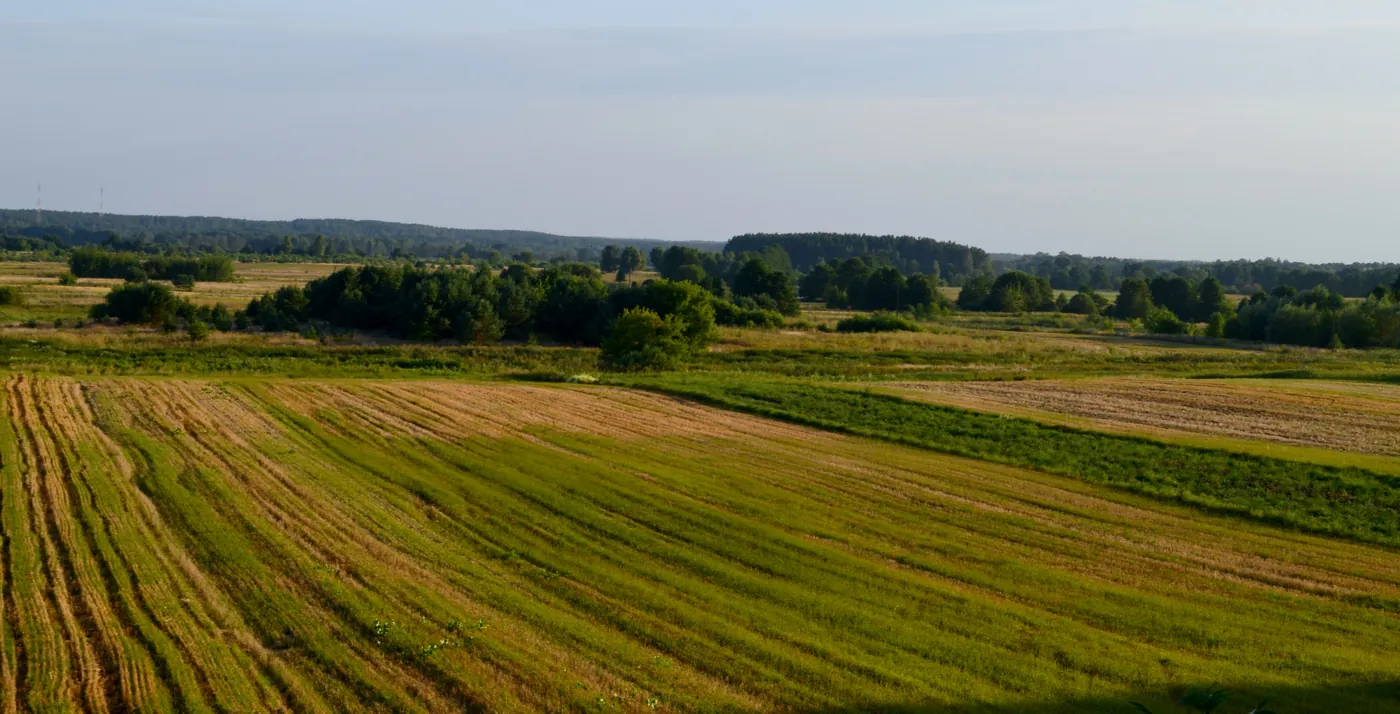
Only a short journey south of Druskininkai, Raigardas Valley feels unexpectedly wide and quiet. Its patchwork of meadows, forest edge and Nemunas landscape inspired one of the most direct connections between this place and Lithuanian art: M. K. Čiurlionis’s 1907 triptych Raigardas. Add the old village of Švendubrė and its legendary Devil’s Stone, and you have a rewarding nature-and-culture outing from Domi Lini.
Why Raigardas matters to Čiurlionis
The M. K. Čiurlionis National Museum of Art describes Raigardas as a three-part panorama painted in 1907 and the artist’s only fully completed landscape painted from nature. The composition looks down over fields and a winding line of trees rather than recording a single postcard view. Visit the valley after seeing the work and its layers of green become easier to recognize; view the painting first and the real landscape becomes more than a scenic stop.
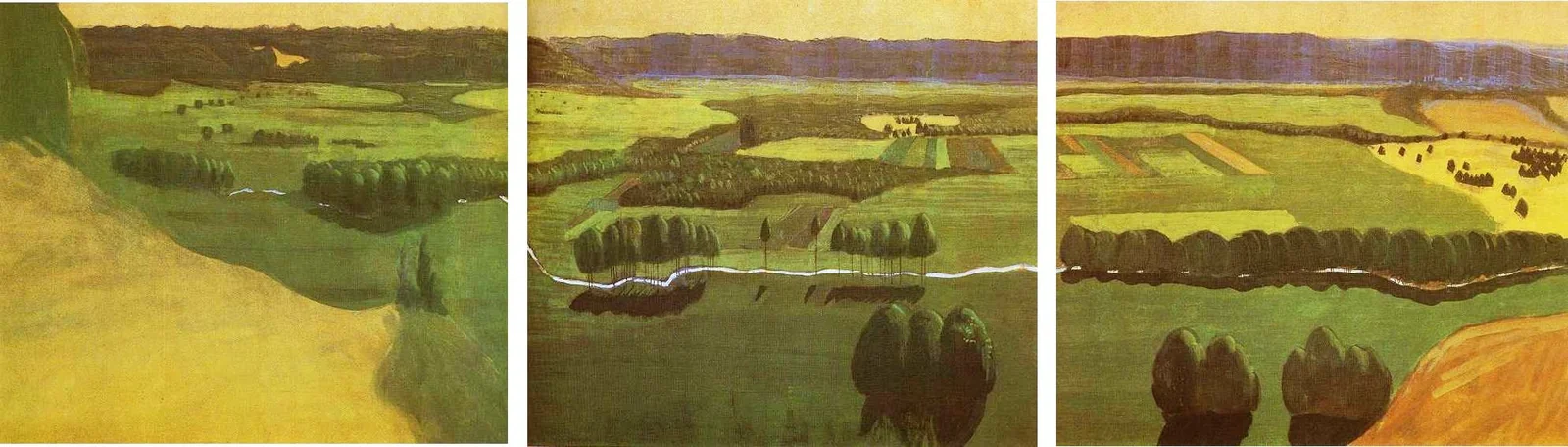
Čiurlionis loved this area, but do not expect a marked spot proving exactly where he placed his easel. A Čiurlionis museum account of a walk to Švendubrė invites visitors to imagine that viewpoint rather than presenting a verified coordinate. The more interesting experience is to look across the valley and compare its rhythm with the triptych.
The valley in front of you
Raigardas lies roughly 5 km south of Druskininkai, beside the Nemunas. From the edge of Švendubrė, the panorama opens across fields and woodland. It is a lived-in landscape, not a fenced attraction: allow time to pause, photograph the view and watch how light changes the colours. The historic legend of a city swallowed by the earth belongs to local storytelling, not documented geology. The official Druskininkai legends collection explains the tale of bells heard beneath the valley.
Švendubrė: village, stone and oak
Švendubrė is an old street village on the valley’s edge, recorded in historical documents in 1620. Its traditional Dzūkian farmsteads and fenced yards make a slow walk worthwhile. Please treat them as homes, keep to public roads and paths, and avoid entering private courtyards.
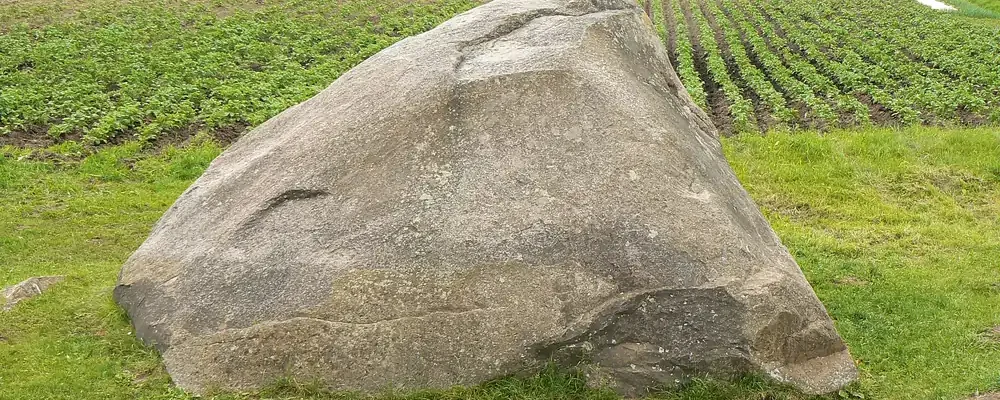
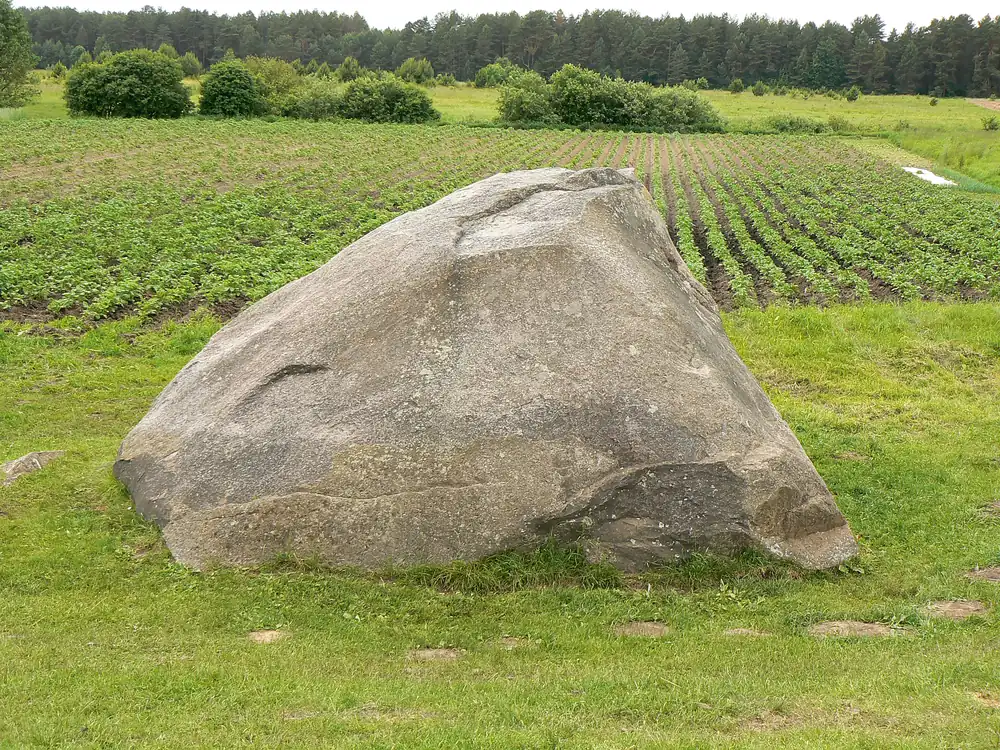
On the village’s northern side stands the Devil’s Stone (Velnio akmuo), a protected boulder surrounded by stories. In one version, a devil dropped the stone before he could destroy the legendary city of Raigardas. It is a delightful story to read beside the real geological monument.
The nearby old oak is affectionately called Kastukas’s Oak—Kastukas was Čiurlionis’s childhood nickname. The tourism office’s tree route says a local story connects it with his Sonata IV. Andante. That is a tradition, not a proven identification of the painting’s model.
How to plan the visit from Domi Lini
For an active outing, follow the official “Orbit of the Stars” cycle route. It passes the Devil’s Stone, Švendubrė and Raigardas Valley; the tourism office offers 9, 12 and 24 km variants. Choose the distance and surface that suit your group, and check the current route map before setting off. If you prefer a short stop, travel to Švendubrė village and explore on foot. The landscape is close to the national border, so stay on marked public routes.
To make this a fuller Čiurlionis day, pair the valley with the M. K. Čiurlionis Memorial Museum in Druskininkai. Our cycling guide has more route ideas. After the trip, return to Domi Lini’s self-catering apartments for a relaxed evening.
Quick answers
How far is Raigardas Valley from Druskininkai?
The valley is about 5 km south of the resort; the distance you travel depends on your chosen viewpoint and route.
Can I visit Švendubrė and the valley in one trip?
Yes. Švendubrė sits at the valley’s edge, and the official cycle route includes both the village and Devil’s Stone.
Did Čiurlionis paint Raigardas Valley?
Yes. His Raigardas triptych dates to 1907. The museum calls it his only fully completed landscape painted from nature.
Is there an entrance fee?
This is an open village and landscape rather than a ticketed attraction. Respect signs, private property and any route restrictions.