

Druskininkai may be best known as a spa resort, but it has also developed into a serious training destination for skiers, snowboarders and sports teams. Its principal advantage is simple: athletes can train on snow throughout the year, while strength, swimming, rehabilitation and recovery facilities are available elsewhere in the town.
This combination makes Druskininkai suitable for professional teams, youth clubs and committed recreational athletes preparing for the winter season.
Year-round training at Snow Arena
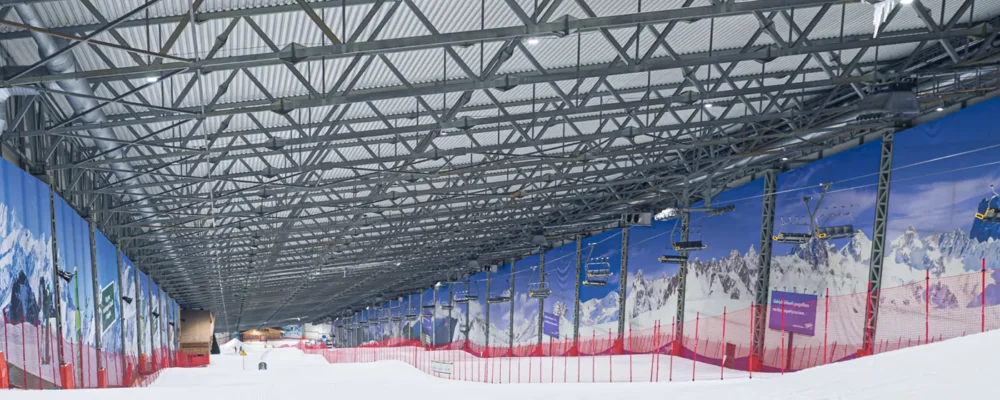
The centre of winter-sports training in Druskininkai is Snow Arena, the only year-round indoor winter-sports complex in the Baltic states.
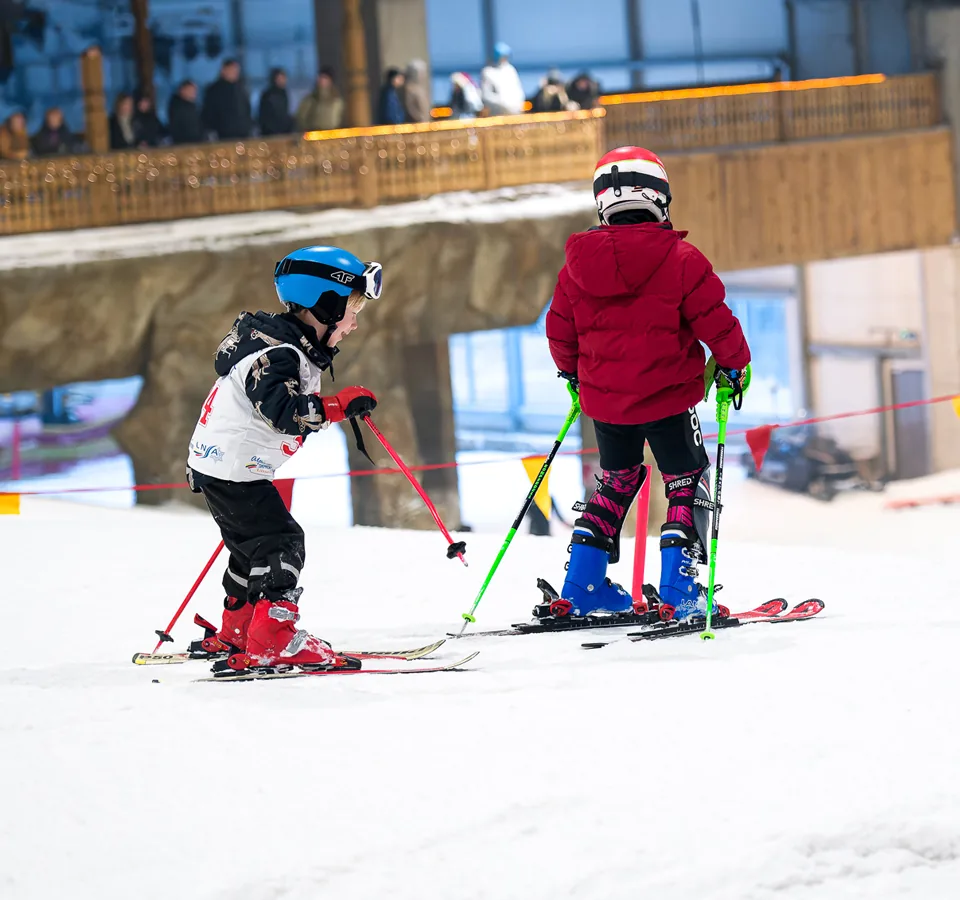
Its main indoor slope is approximately 460 metres long and 50 metres wide. Temperatures normally remain between –2°C and –4°C, providing predictable snow conditions regardless of the weather outside. The arena also contains a separate learning area, equipment rental, changing facilities, showers and approximately 1,000 lockers.
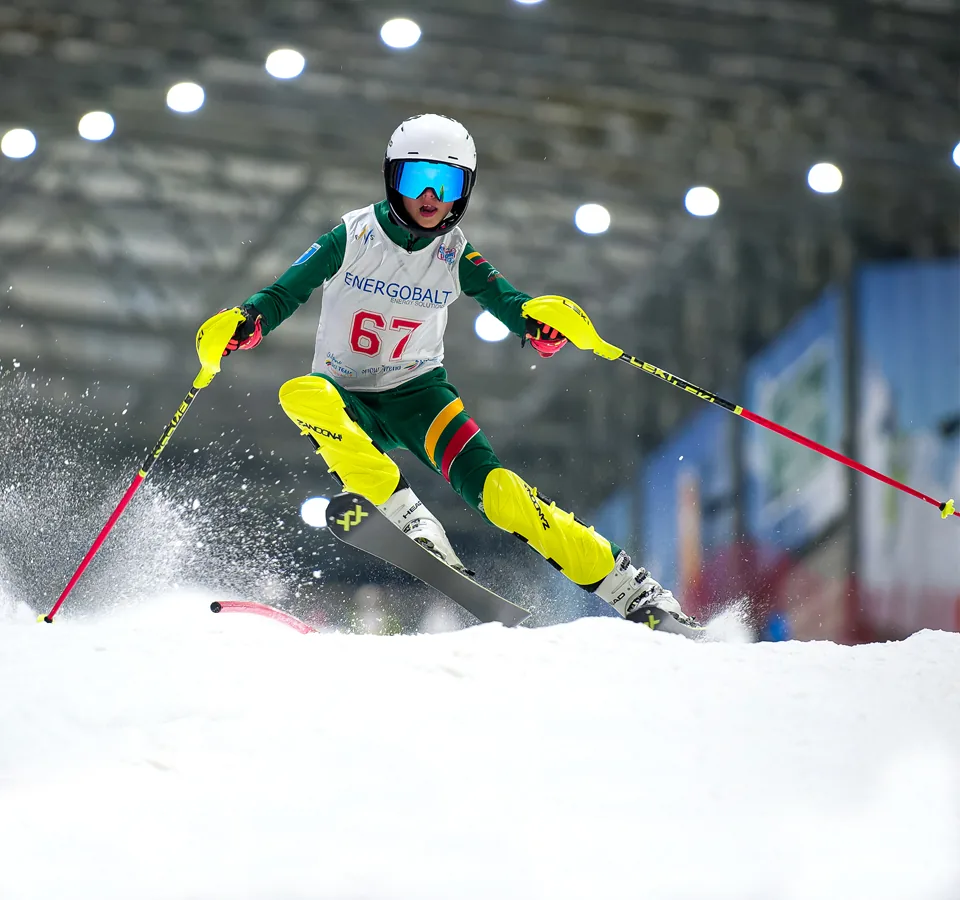
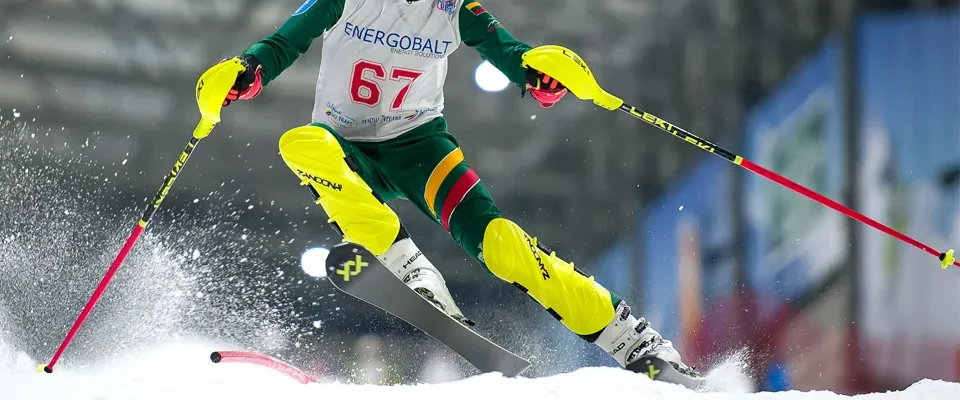
The arena supports three principal competitive disciplines:
- Alpine skiing
- Freestyle skiing
- Snowboarding
Between June and November, a substantial section of the main slope is commonly separated with safety netting for professional training. The surface can be prepared with water to create a very hard, icy course—useful for technical race preparation but unsuitable for inexperienced skiers.
Snow Arena reports that more than 5,000 athletes representing 70 countries have trained there. Recent visitors have included youth and elite teams from countries ranging from Finland and Italy to Japan and the United States. The venue has also hosted FIS competitions and training by Olympic and World Championship athletes. Snow Arena’s athlete information provides current arrangements and team contacts.
Why athletes train indoors before winter
An indoor slope does not replace mountain training. Its value lies in providing controlled, repeatable conditions when natural snow is unavailable or unreliable.
Teams can use the arena for:
- Repeated slalom and technical drills
- Edge-control training on firm snow
- Starts and short-course exercises
- Video analysis
- Equipment testing
- Return-to-snow sessions before mountain camps
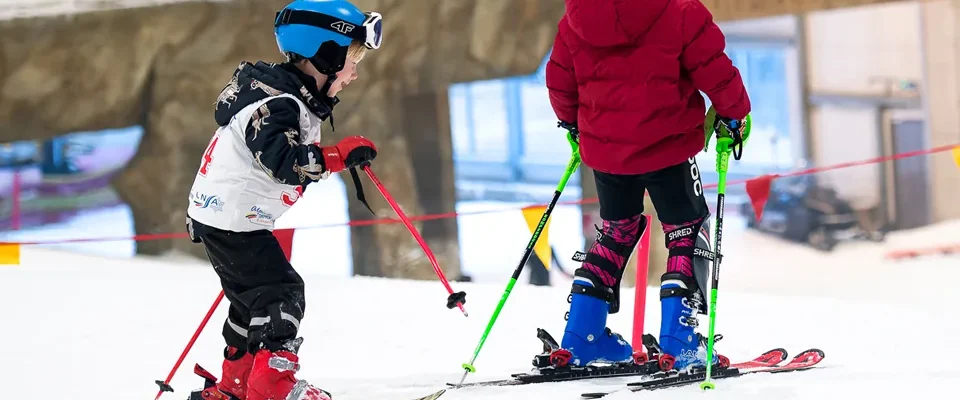
- Preparing young athletes for their first winter competitions
Unlike a glacier camp, an indoor session is largely protected from wind, fog, poor visibility and sudden temperature changes. Coaches can plan a specific number of runs and repeat the same exercise under comparable conditions.
Druskininkai skier Neringa Stepanauskaitė used Snow Arena as part of her year-round preparation before qualifying for the 2026 Winter Olympic Games. The municipality described consistent training in Druskininkai, combined with camps in the mountains, as an important part of her development. Read the official account.
Training arrangements for clubs and teams
Professional and organised athlete groups must register with Snow Arena in advance. Training lanes, ice-track sessions and service rooms for ski preparation can be reserved separately.
At the time of research, published two-hour lane-training rates depended on group size:
- Ten or more athletes: €25 per team
- Five to nine athletes: €35 per team
- One to four athletes: €55 per team
These prices should be treated as indicative. Teams should request a current quotation and confirm slope availability, athlete passes, coaching arrangements and service-room requirements before travelling.
Sports-group contact: sport@snowarena.lt
Address: Nemuno kelias 2, Mizarai, Druskininkai Municipality
Coaching for developing skiers and snowboarders
Training in Druskininkai is not limited to national teams. Snow Arena offers lessons for beginners, advanced recreational skiers and snowboarders. Its instructors hold qualifications that meet International Ski Instructors Association standards, and advance booking is required.
The independent DruSkiSchool also operates inside Snow Arena. It provides alpine-ski and snowboard coaching for people who want to learn the fundamentals or improve established technique.
A short pre-season visit can therefore work for a family, an amateur racing group or a club whose athletes have different ability levels.
Strength, swimming and conditioning
A well-planned training camp should not consist entirely of slope sessions. The Lithuanian Sports Centre complex in Druskininkai provides complementary facilities at M. K. Čiurlionio Street 115A.
The complex includes:
- A 25-metre, eight-lane swimming pool
- A 340 m² fitness room
- Indoor sports halls
- A stadium
- Natural- and artificial-surface football pitches
- Tennis and other training areas
These facilities make it possible to combine morning snow training with controlled strength work, swimming or general conditioning. Reservations and group arrangements should be made directly with the sports complex.
Outdoor winter training
When natural snowfall and temperatures permit, a 1.6-kilometre cross-country skiing trail is prepared through the forest between Park Bridge and Snow Arena. The route follows a cycle path and is illuminated in the evening.
Cross-country equipment can normally be rented from Snow Arena and the Druskininkai Tourism and Business Information Centre. Because the trail depends entirely on suitable winter weather, athletes should confirm its condition shortly before visiting.
The surrounding forests and paved cycling routes remain useful for running, walking and low-intensity conditioning when there is insufficient natural snow. They should not, however, be presented as permanent cross-country or biathlon facilities.
Recovery in a spa town
Recovery is where Druskininkai differs from a conventional indoor ski venue. The town’s medical spas and wellness centres offer swimming, physiotherapy, massage, mineral-water treatments, saunas and supervised rehabilitation.
Depending on an athlete’s programme, useful recovery options may include:
- Easy swimming or water-based mobility work
- Sports massage and physiotherapy
- Sauna used cautiously after training
- Mineral-water treatments
- Quiet walking through the pine forests
- Scheduled rest between double training sessions
Treatments should support the coach’s programme rather than replace appropriate medical advice. Our separate guides to SPA centres in Druskininkai, saunas and medical rehabilitation explain the main options.
A sample three-day training plan
Day one
- Arrival and equipment preparation
- Afternoon familiarisation session at Snow Arena
- Video review and mobility work
Day two
- Morning technical session on snow
- Lunch and rest
- Afternoon strength or swimming session
- Light recovery treatment
Day three
- Morning timed runs or focused technical drills
- Equipment testing
- Easy forest walk or pool recovery before departure
Professional teams will naturally require a more detailed programme, but this structure illustrates how snow, conditioning and recovery can be combined without excessive travel between locations.
Staying at Domi Lini during a training visit
Domi Lini can suit independent athletes, coaches and small groups who prefer self-catering accommodation. Separate bedrooms, equipped kitchens, parking and quiet outdoor space make it possible to organise meals and rest around a training schedule.
Snow Arena is situated across the Nemunas from central Druskininkai and is accessible by road. The cable car provides an attractive connection from the Aquapark area during its operating hours, although teams carrying substantial equipment will normally find road transport more practical.
For availability and group requirements, contact Domi Lini before confirming the training schedule.
Practical checklist
- Reserve training time directly with Snow Arena.
- Confirm whether the slope will be divided for team training.
- Discuss the required snow or ice preparation.
- Reserve a service room if skis need daily tuning.
- Check current opening hours and competition dates.
- Arrange coaching separately where required.
- Reserve strength, pool and recovery sessions in advance.
- Confirm transport for athletes and equipment.
- Ensure every participant has suitable insurance.
- Treat outdoor cross-country skiing as weather-dependent.
Druskininkai cannot reproduce the length, altitude or terrain of an Alpine resort. What it offers instead is dependable snow, intensive technical repetition and an unusually broad supporting environment. For pre-season preparation, youth development or a focused technical camp, that combination can make the town a practical winter-sports training base.