

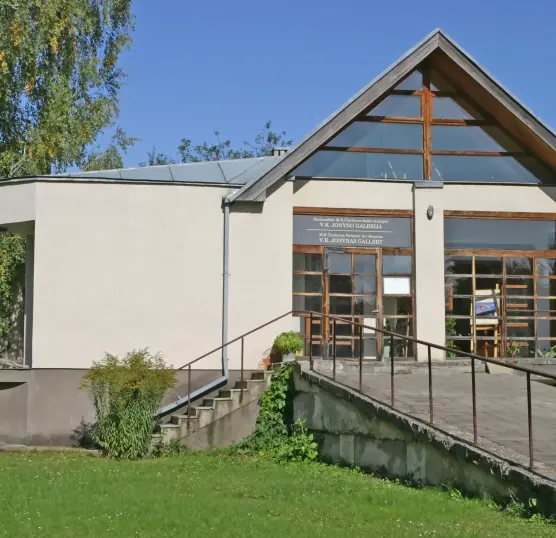
The V. K. Jonynas Gallery in Druskininkai is more than a museum dedicated to one artist. It is also the house where Vytautas Kazimieras Jonynas spent his final summers, worked, met visitors and helped shape the display of the art he had brought home after decades abroad. For anyone interested in Lithuanian culture, graphic art or the story of exile and return, this intimate gallery is one of the town’s most rewarding cultural stops.
Who was Vytautas Kazimieras Jonynas?
Vytautas Kazimieras Jonynas (1907–1997) was one of the most versatile Lithuanian artists of the twentieth century: a graphic artist, illustrator, painter, sculptor, stained-glass designer and influential teacher. He studied at the Kaunas Art School and continued his education in Paris from 1931 to 1935, specialising in wood engraving and book art while also studying sculpture and furniture design.
His international reputation developed quickly. Jonynas received major recognition at the 1937 Paris International Exposition, including a gold medal for wood engravings and posters, and in 1938 he was awarded the French Legion of Honour. In Lithuania, his illustrations for Kristijonas Donelaitis’s The Seasons earned the State Prize in 1940.
From Lithuania to Freiburg and New York
Jonynas left Lithuania in 1944 as the Second World War approached its final phase. In post-war Germany he founded the Freiburg School of Arts and Crafts in 1946, which became an important centre for Lithuanian artists living in displacement. He moved to the United States in 1951, taught at several New York institutions and established a studio producing stained glass and monumental art.
His work abroad ranged from postage stamps and book illustration to sculptures, mosaics, church interiors and stained-glass windows. One of his best-known international projects is connected with the Lithuanian Martyrs’ Chapel in St Peter’s Basilica in the Vatican. This breadth explains why the Druskininkai collection feels less like a single-medium exhibition and more like a journey through an entire creative life.
Why Druskininkai became Jonynas’s home in Lithuania
The gallery building was designed by architect Algimantas Kančas and completed in 1989. It was conceived as both an exhibition venue and a place to live—part gallery, part summer home. After more than four decades in emigration, Jonynas spent his summers here from 1989 until 1997.
The V. K. Jonynas Gallery opened to visitors on 4 November 1993 as a branch of the M. K. Čiurlionis National Museum of Art. Jonynas did not remain a distant name on the wall: he lived and worked here, improved the displays, participated in the cultural life of Druskininkai and spoke directly with visitors about his art. In 1997 the municipality named him an honorary citizen of Druskininkai for his contribution to Lithuanian and local culture.
What you can see inside the gallery
The permanent display contains more than one hundred works created between 1931 and 1982, all donated to Lithuania by the artist. The collection reveals how Jonynas carried ideas and techniques between Lithuania, France, Germany and the United States.
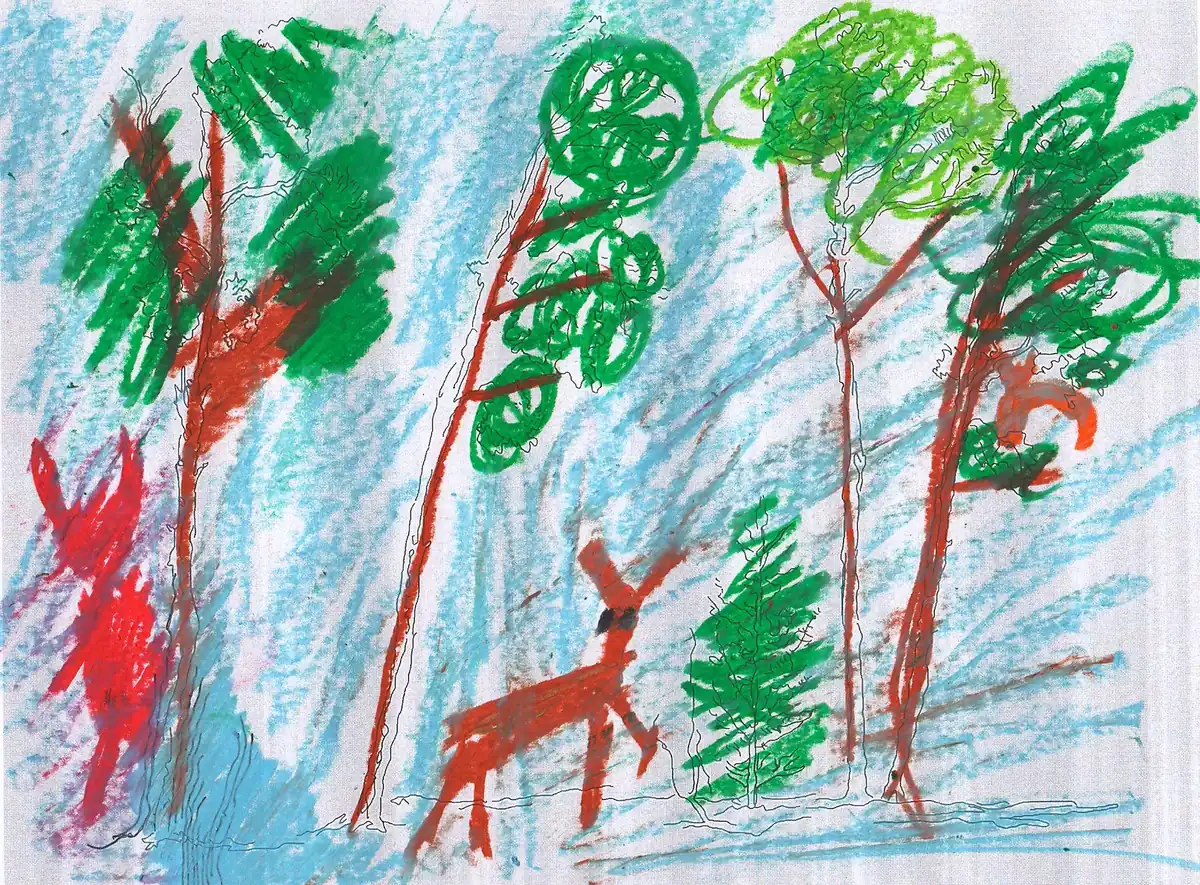
Jonynas was especially responsive to nature and colour; the pastel My Garden shows the freer, more immediate side of an artist often associated with precise graphic work.
- woodcuts, book illustrations and ex-libris from his Lithuanian years;
- Freiburg-period prints and postage-stamp designs;
- lithographs made during the Mainz period;
- drawings, watercolours, pastels and paintings;
- stained-glass designs, sculptures and mosaic projects;
- documentation of church interiors and monumental works created in the United States.
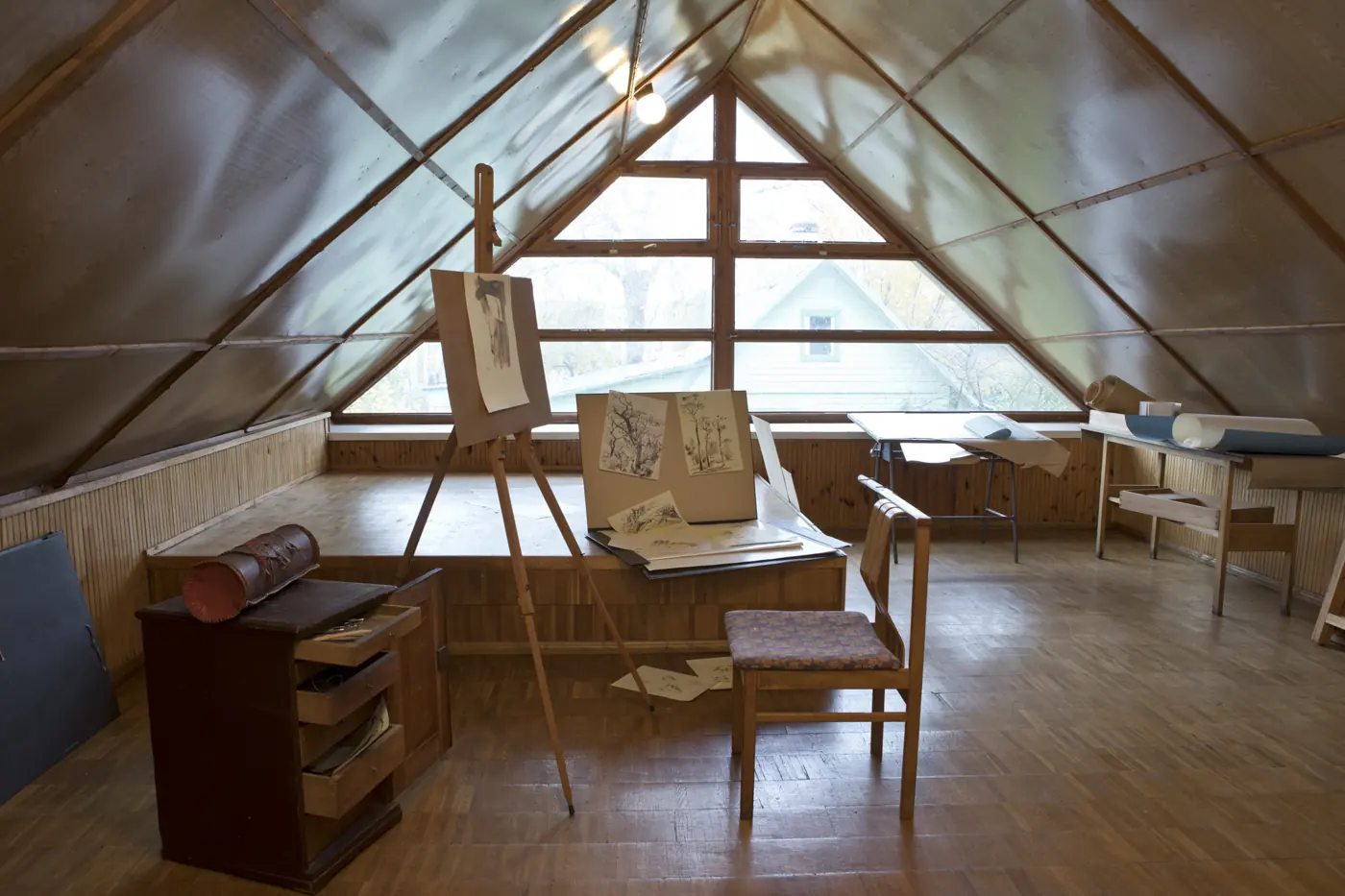
The domestic rooms and personal details are part of the experience. Instead of separating the artist from his surroundings, the house-gallery preserves the atmosphere in which he welcomed guests and continued working. Temporary exhibitions, talks, educational activities and chamber events also broaden the programme.
Planning your visit
Address: Turistų g. 9, Druskininkai.
Current regular opening hours: Tuesday–Friday 10:00–17:00, Saturday 11:00–18:00 and Sunday 11:00–16:00. Last admission is at least 30 minutes before closing. Hours and exhibitions can change, so check the official V. K. Jonynas Gallery page before visiting.
Allow roughly 45–75 minutes for an unhurried visit. The gallery works especially well as part of a cultural walk through central Druskininkai. Continue with our history of Druskininkai, explore creative workshops in Druskininkai, or browse more ideas on our nearby attractions page.
Why we recommend it
The gallery brings together several histories at once: the development of modern Lithuanian art, the experience of artists forced into exile, and the cultural renewal that accompanied Lithuania’s restored independence. Above all, it retains a human scale. You encounter not only Jonynas’s finished work, but also the rooms, tools and everyday setting of an artist who chose Druskininkai as his Lithuanian summer home.
That makes the V. K. Jonynas Gallery a particularly meaningful place to visit: international in its artistic scope, deeply Lithuanian in its story, and inseparable from Druskininkai.