

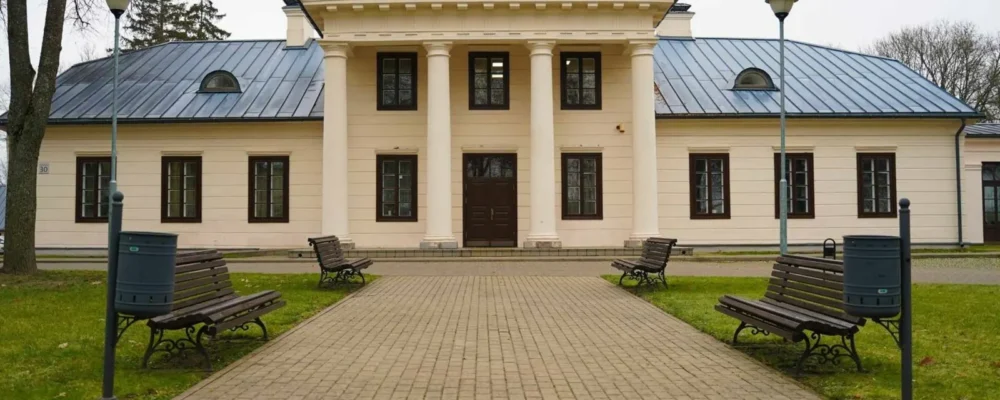
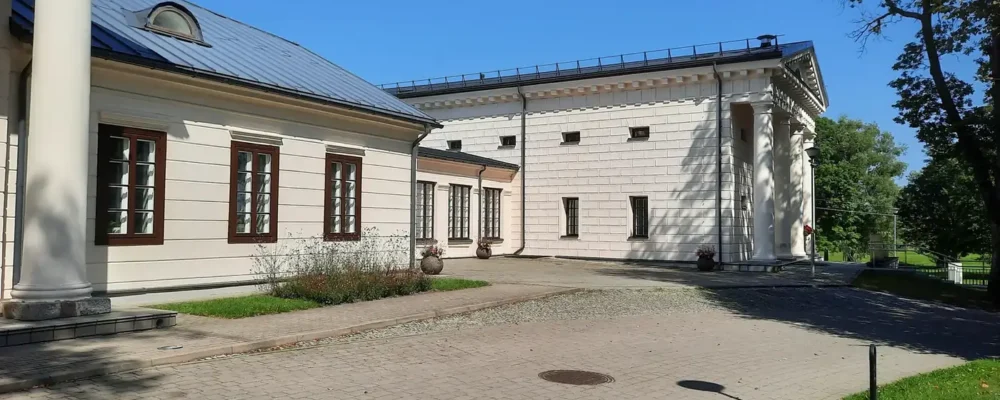
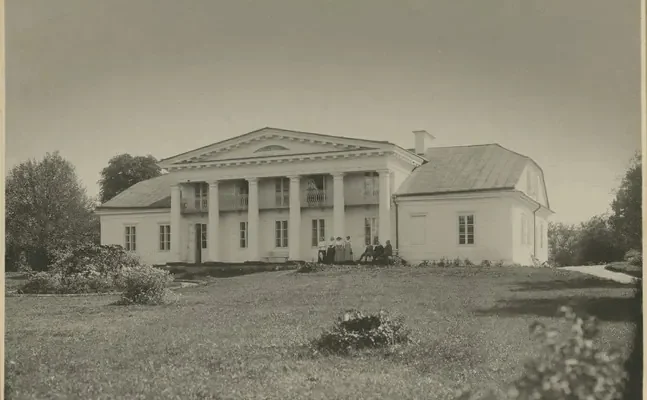
Leipalingis Manor is one of the most rewarding short cultural trips from Druskininkai. About 12 kilometres from the resort, the restored Classical ensemble brings together several layers of southern Lithuania’s history: noble families, changing architecture, a small-town school, a local museum and the cultural life of present-day Leipalingis.
The manor is not a grand palace isolated behind gates. It stands close to the centre of Leipalingis and works best as part of an unhurried visit that also includes the town church, park fragments and a walk through the historic settlement.
Why visit Leipalingis Manor?
For guests staying in Druskininkai, Leipalingis Manor offers a different view of the region. Druskininkai tells the story of mineral water, health resorts and twentieth-century tourism; Leipalingis reveals the older rural estates, landowners and local communities that shaped Dzūkija before the modern resort developed.
The surviving complex includes the main manor house and several associated buildings, among them an outbuilding, gardener’s house, former distillery and fragments of the historic park. Together they make the visit more meaningful than a single photographed façade.
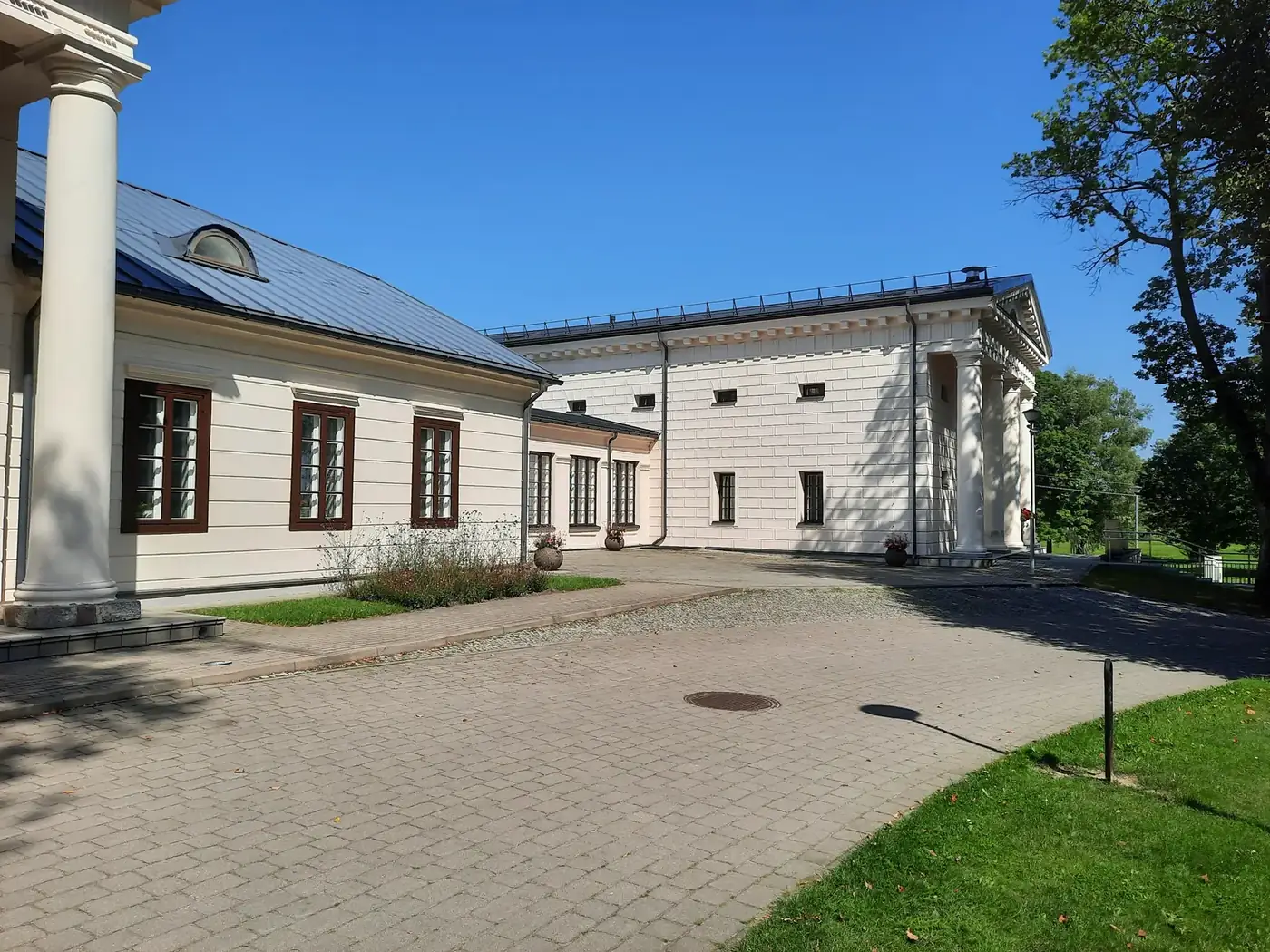
A history stretching back to the early sixteenth century
Leipalingis Manor first appears in written sources in 1503. Over the following centuries it belonged to several influential families, including the Sapiehas, Masalskis, Platers, Kruszewskis and Balisńskis. These changes of ownership linked the estate to the wider political and cultural history of the Grand Duchy of Lithuania and, later, the Russian Empire.
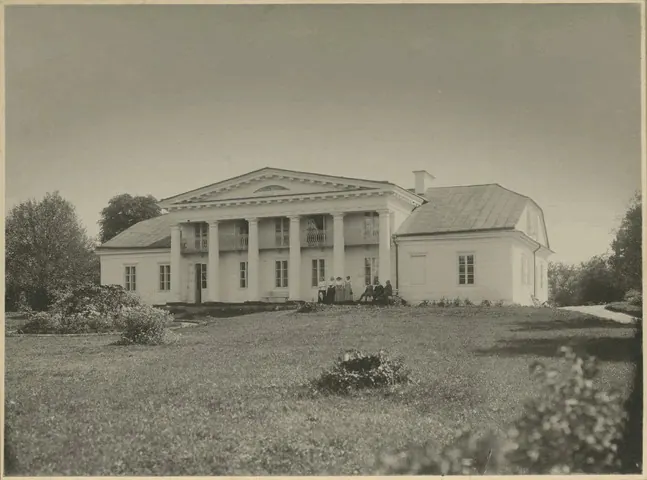
The present Classical ensemble developed mainly around the late eighteenth and early nineteenth centuries. Heritage research associates the design with the architectural circle of Martin Knakfus, one of the important architects of early Classicism in Lithuania, although the complex was altered repeatedly as its use changed. The restrained façade, balanced proportions and columned entrance still give the manor its distinctive character.
Like many Lithuanian estates, Leipalingis was not preserved as an untouched aristocratic residence. It was adapted to new purposes. A school moved into the manor in 1923, returned after the Second World War and remained connected with the complex for decades. That educational chapter is now part of the building’s identity rather than something hidden by restoration.
Restoration and a new public role
After a period of limited use, the manor was restored in stages. The first renewed spaces reopened in 2015, while further work completed the rehabilitation of the remaining rooms. Architectural investigations carried out during the project helped specialists distinguish different building phases and recover details documented in old photographs.
Today the manor serves the community. It accommodates cultural activities, a library and the Algirdas Volungevičius Local History Museum. This living use is one of the best reasons to visit: the building is not merely a monument, but a place where local history continues to be collected and presented.
Algirdas Volungevičius Local History Museum
The museum grew from the work of teacher and local historian Algirdas Volungevičius, who established a school museum in 1957. Its collection now numbers around 12,000 objects covering archaeology, palaeontology, ethnography, history, art and folklore.
Displays help explain the settlement and its surroundings from early human activity to the twentieth century. Of particular interest is material connected with the Yotvingians, the Baltic people whose archaeological legacy is strongly associated with this part of southern Lithuania. The museum makes the manor more than an architectural stop: it gives context to the landscape outside its windows.
What else to see in Leipalingis
Allow time for the Church of the Assumption of the Blessed Virgin Mary, completed in 1821, and its later nineteenth-century bell tower. The town’s radial street plan also preserves clues to Leipalingis’s development as a local centre.
Leipalingis also has a documented Jewish history. Visitors interested in that difficult and important layer of the region can continue with our guide to Jewish heritage in and around Druskininkai. Please approach cemeteries and memorial places quietly and respectfully.
Planning a visit from Druskininkai
- Address: Alėjos g. 30, Leipalingis.
- Distance: approximately 12 km from central Druskininkai.
- Travel time: roughly 15–20 minutes by car, depending on your starting point and road conditions.
- Suggested visit: allow about 60–90 minutes for the manor, museum and a short walk around the centre.
- Access: opening arrangements, exhibitions and guided visits can change. Confirm the current schedule before travelling.
- Contact: the published manor contacts are +370 313 43373, +370 612 23212 and leipalingis.dvaras@gmail.com.
The exterior and surrounding town can be explored independently, but the museum gives the visit its strongest historical context. If you want a guided visit or are travelling with a group, contact the manor in advance rather than assuming that every room will be open.
How to combine Leipalingis with another trip
Leipalingis fits easily into a half-day excursion. Travellers interested in regional history can pair it with our Merkinė day-trip route, while those who prefer a shorter outing can return to Druskininkai and continue with the history of Druskininkai or the town’s museums and art spaces.
For a broader selection of places around the resort, browse our nearby attractions guide. Leipalingis Manor is especially well suited to travellers who enjoy architecture, local museums and destinations where several centuries of history remain visible in one compact place.
FAQ
Is Leipalingis Manor open every day?
Do not assume daily access. Cultural events, museum opening arrangements and guided visits may vary, so check directly with the manor before setting out.
How far is Leipalingis Manor from Druskininkai?
It is about 12 kilometres from central Druskininkai, normally a 15–20 minute drive.
Is the manor suitable for families?
Yes, especially for children interested in archaeology, local objects and stories. The visit is compact, but adults should judge the museum content and walking pace for their own group.
Can I visit without a car?
Public transport connections may be available, but timetables change. Check the current municipal or regional schedule for both directions before planning the trip.
Information checked 17 October 2026. Historical sources include the Cultural Heritage Centre, the Lithuanian Universal Encyclopaedia, LRT’s report on the restoration and architectural research published by the Vilnius Academy of Arts.